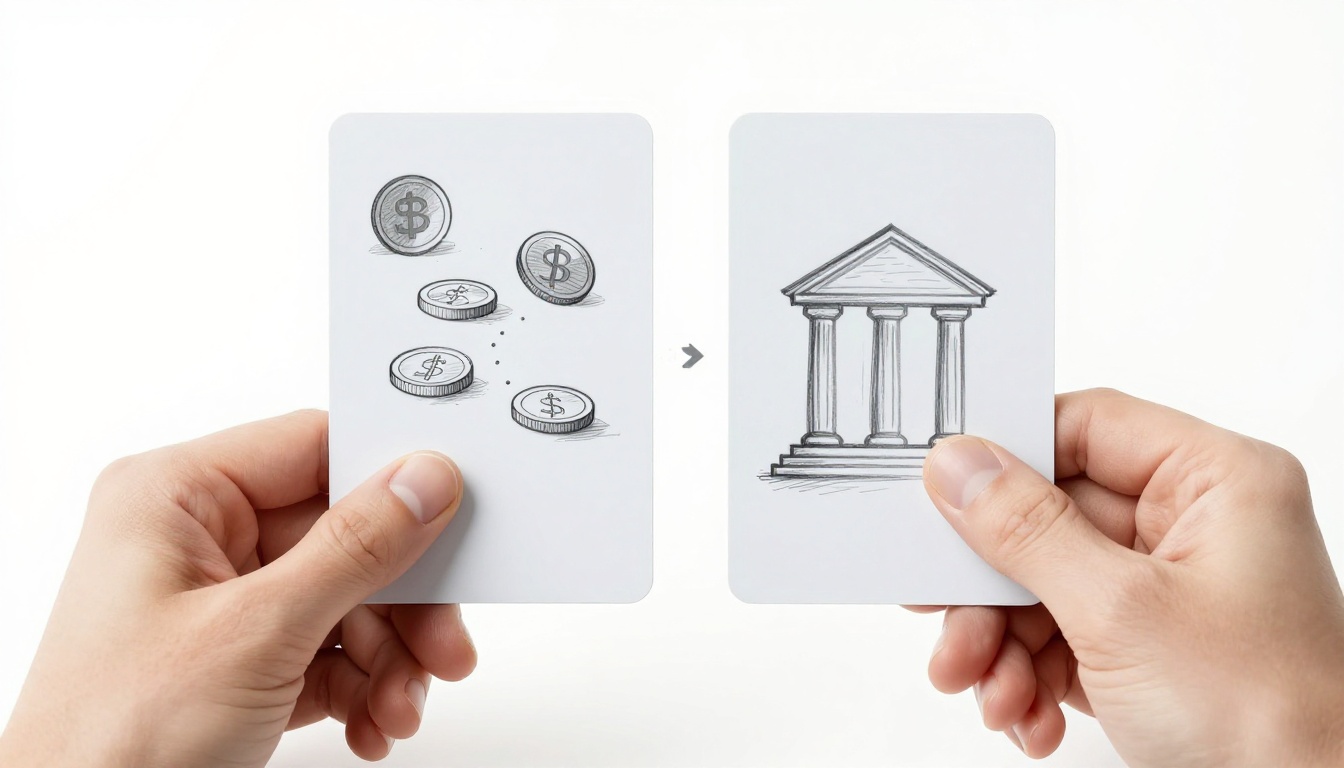
The next time you swipe a card, pause for a second. Are you paying with money you already have, or borrowing money to pay later? That small difference matters, because it changes your cash flow, your risk, and even the fees you might see.
Debit and credit cards can look identical at checkout. You still tap, swipe, or insert. Still, the money path is totally different behind the scenes.
If you pick the wrong card for the situation, you can end up with surprises. You might face overdraft fees, or interest charges that add up month after month. On the other hand, choosing well can help you stick to a budget and avoid stress.
So, let’s make it clear. First, you’ll see how each card works at the point of sale. Next, you’ll compare real costs like overdrafts and interest. Then we’ll cover rewards, fraud protection, and a quick match between each card type and your needs. Bottom line: debit uses your money now, while credit lets you borrow and pay later.
How Do Debit and Credit Cards Work at the Point of Sale?
Think of debit as “wallet money on the go.” When you use it, the purchase comes straight from your checking or savings account. Because the funds are already yours, the transaction usually settles almost right away.
Credit is more like “short-term borrowing.” When you swipe a credit card, you’re not pulling from your bank balance. Instead, you’re borrowing from the credit card issuer. After that, you get a bill later, usually once per statement cycle. If you pay on time, you can avoid interest. If you don’t, interest can start to grow.
Here’s a simple way to picture it. Both cards buy the same item, but the payment route differs.

If you want the clean, practical version, Experian breaks down the key difference as “existing funds” versus “borrowed credit.” See Credit Card vs. Debit Card: How Are They Different?.
Debit Cards: Pulling Funds Straight from Your Account
When you pay with debit, the bank checks what you have. Then the purchase reduces your account balance. As a result, the card can act like cash substitute, but with easier checkout.
In most cases, debit transactions process in real time or near real time. So your balance changes fast, and you can track it through your bank app.
You’ll also see debit work through ATMs. If you withdraw cash, the bank pulls money from your account the same way. Usually, you use a PIN. At some stores, you may be prompted to choose between PIN or signature, depending on the terminal and the network.
One important detail: debit does not automatically protect you from spending more than you have. If your bank offers overdraft coverage, the bank may approve the charge anyway. Then you’ll pay fees. Without overdraft, the transaction can decline.
Credit Cards: Buy Now and Settle Up Later
Credit cards use a revolving line of credit. Each purchase becomes part of your balance. That balance is what you’ll owe when your statement closes and your due date arrives.
Many cards also include a grace period. In plain terms, it’s time after the statement ends where you can pay in full without owing interest. Commonly, that window falls around 21 to 25 days, depending on how your statement cycle lines up.
Still, grace periods have conditions. If you carry a balance from month to month, you can owe interest on new purchases too. So paying only the minimum can cost you over time.
Also, credit cards often include a credit limit. That limit is a safety cap. Once you’re near it, more charges can be blocked.
For another example of how the “borrow now, pay later” model works, Investopedia’s guide is easy to skim at Debit vs. Credit Cards: Understanding Key Differences.
What Are the Real Costs? Fees, Interest, and Overdrafts Compared
Costs are where debit and credit really separate. With debit, you usually don’t pay interest on purchases. With credit, you might, depending on whether you pay your balance in full.
However, debit can still get expensive through fees. Overdraft charges are the main risk. Credit card costs can include interest, late fees, and sometimes annual fees.
Also, rates matter right now. In March 2026, average credit card APRs are about 19% to 24% for many consumers, depending on credit score. Some sources report average offers around 23.72%. That’s a high range, and it makes carrying a balance costly.
Quick side-by-side cost view
Here’s a practical comparison of what you might pay.
| Card type | Common cost | When it shows up | How to reduce it |
|---|---|---|---|
| Debit card | Overdraft fee (if enabled) and possible ATM fees | When you spend past your balance, or use out-of-network ATMs | Turn on alerts, watch your available balance, consider overdraft opt-outs |
| Credit card | Interest (APR), late fees, sometimes annual fees | If you carry a balance, miss payments, or have an annual-fee card | Pay in full monthly, set autopay, choose no-annual-fee options |
Remember, your exact fees depend on your bank and your specific card terms.
Overdraft Traps and ATM Fees with Debit Cards
Debit cards pull from your account. So overdraft happens when your charge exceeds your available balance.
Many banks offer ways to handle this. Some may decline the transaction. Others may cover it if you opt in to overdraft protection. If coverage applies, you might see a fee each time it happens.
Exact 2026 averages aren’t easy to pin down publicly. Still, many large banks commonly charge around $30 to $35 per overdraft. Because this varies, always check your bank’s fee schedule.
ATM fees are another debit reality. If you withdraw cash at an out-of-network ATM, you may pay a fee. Sometimes, the ATM operator adds its own fee too.
Two simple habits help a lot. First, keep an eye on your “available balance,” not just what you see as “current balance.” Second, set low-balance alerts in your banking app.
Interest and Penalty Fees on Credit Cards
Credit cards charge interest when you don’t pay the statement balance in full. In other words, you’re not just borrowing, you’re paying for that borrowing.
With today’s APRs running roughly 19% to 24% on average, even a modest carried balance can grow quickly. Interest doesn’t feel big at first. Then the months stack up, and suddenly your “small purchase” has a larger price tag.
Late fees add another layer. If you miss a due date, you may owe a penalty. Some cards also raise your APR after repeated missed payments.
Also, grace periods can end interest on new purchases only if you follow the rules. If you don’t pay in full, you might lose the benefit.
The simplest strategy is also the most effective: pay your credit card in full each month. If that’s hard, use autopay for at least the full statement balance, if your card offers it.
If you want the practical policy basics on debit protections, Bankrate explains how Regulation E limits debit liability and guides error resolution at What Is Regulation E?. It’s useful context when you’re comparing safety, not just cost.
Perks Like Rewards and Credit Building: Who Offers More?
Here’s the truth most people discover after getting both types of cards: credit cards often bring perks, while debit cards usually don’t.
That’s not a rule, but it’s common. Debit cards may include basic cashback tied to a bank program. Yet the big, flashy rewards usually come from credit cards.
Credit cards also help you build credit history. Credit bureaus track how you use revolving credit. On-time payments can boost your score over time. Debt-to-credit ratio matters too.
Meanwhile, debit card usage typically does not build credit. You can use debit every day, and your credit score won’t rise from it.
So, if you want perks and credit growth, credit cards usually win. If you want budgeting control, debit often fits better.
Unlocking Rewards and Bonuses with Credit Cards
Rewards in 2026 commonly fall into a few buckets:
- Cash back cards (often 1% to 5% depending on category)
- Travel or miles cards (points for flights, hotels, and more)
- Store or partner rewards cards (higher perks at specific merchants)
Also, many cards include welcome bonuses. You may get points or cash after you spend a certain amount in the first few months.
One warning: rewards don’t matter if the card costs you interest. If you carry a balance, you might pay more in APR than the rewards you earn.
A solid approach is to treat rewards as a discount, not a reason to overspend. If you can’t pay in full, pause and focus on stability first.
Building a Strong Credit History the Credit Card Way
Credit history works like a report card. Each month, your card issuer reports activity. That includes your balance and payment behavior.
So if you make on-time payments, you show reliability. If you miss payments or use too much of your limit, your score can suffer.
For beginners, a few tactics help:
- Keep balances low compared to your limit
- Pay before the due date if cash flow is tight
- Use autopay for at least the minimum
- Consider a secured credit card if you’re new
If you’re wondering how issuers position the difference, Citi gives a straightforward explanation of credit versus debit at Credit Card vs. Debit Card | What’s the Difference?.
Fraud Protection: Which Card Shields You Better?
Fraud is scary, no matter what you carry. But the legal protections can differ between debit and credit cards. The biggest difference is the money at stake.
With debit cards, the funds usually come directly from your checking account. So the transaction affects real cash right away. That’s why Regulation E applies to many debit and electronic fund transfers.
With credit cards, you’re borrowing for the purchase. Federal law like the Fair Credit Billing Act (FCBA) offers rules for disputing billing errors.
In general, credit cards offer more consumer safety for unauthorized charges. Still, both can help if you report issues fast and follow the steps in your card agreement.
Debit Card Safeguards Under Regulation E
Regulation E covers debit cards for many electronic transactions. It helps limit your liability if someone steals your card details or if a transaction error occurs.
A key detail: timing matters. If you report unauthorized activity quickly, your potential loss can be lower.
Bankrate summarizes Regulation E liability as $50 if you report within two business days, then up to $500 if you wait up to 60 days. After that, liability can increase further. Banks may also be required to investigate quickly. That includes steps like provisional credit if the investigation takes longer.
For another clear guide, Experian explains Regulation E in plain language at What Is Regulation E and How Can It Help You?.
Credit Card Security via the Fair Credit Billing Act
FCBA focuses on billing errors on credit cards and similar open-ended credit accounts. Under FCBA, your liability for unauthorized charges is often capped at $50 if you report promptly. Many card issuers also offer zero liability policies, depending on the card and the situation.
In many cases, issuers also investigate and issue temporary credits while they review the claim. That can help you avoid paying for something you didn’t authorize.
The main takeaway is simple: report quickly. Call your issuer as soon as you spot suspicious charges. Then document what you find.
Pros and Cons Side-by-Side: Matching Cards to Your Needs
The “best” card depends on your goal. Are you trying to stay within a budget? Are you trying to build credit? Are you trying to reduce risk?
Debit and credit both help you pay without cash. The difference is what happens when something goes wrong, or when you spend more than planned.
Here’s a compact comparison.
| Factor | Debit card | Credit card |
|---|---|---|
| Spending control | Uses your current balance | Uses available credit, not cash |
| Debt risk | Low if overdraft is off | Higher if you carry balances |
| Interest charges | Usually none | Can be high if not paid in full |
| Overdraft fees | Possible if opt-in coverage | Not typical, but missed payments can hurt |
| Fraud protection | Strong under Regulation E | Often very strong under FCBA and issuer policies |
| Credit building | Usually no impact | Builds credit with on-time payments |
| Best for | Everyday budgeting and habits | Rewards, emergencies, disciplined pay-in-full |
When Debit Cards Shine for Everyday Budgeting
Debit fits naturally when you want cash-like control. Since purchases draw from your account, you can feel the impact right away.
That matters for impulse buys. It also helps when your paycheck comes at a set time. If you keep spending inside your balance, you avoid interest charges entirely.
Debit can also reduce decision fatigue. You don’t need to ask, “Will I pay this off later?” You’re already paying now.
Another benefit: for many people, debit encourages good tracking. You check your balance, you see what’s gone, and you adjust. That habit can improve financial peace.
Still, debit needs discipline in a different way. If you rely on overdraft protection, it can quietly act like a hidden loan. The fees can hit fast.
Scenarios Where Credit Cards Pull Ahead
Credit cards shine when you want flexibility and protection. For example, they can help with travel bookings, car rentals, and larger purchases where disputes sometimes happen.
They’re also useful for emergencies. If your bank account runs low, a credit card can cover the cost while you move money around.
Also, credit cards can be worth it for rewards. If you pay the statement in full, you earn perks without interest costs.
Finally, credit cards are one of the most direct ways to build your credit file. When you pay on time and keep balances low, your score can improve over months.
The risk shows up when you carry a balance. In that case, the high APR makes rewards shrink fast.
Conclusion
So what’s the difference between debit and credit cards? It comes down to one core idea: debit uses your money now, while credit lets you borrow and pay later.
Costs usually follow that difference. Debit often avoids interest but can charge overdraft and ATM fees. Credit can bring rewards and credit building, but interest and late fees can become expensive quickly.
If you’re working on a tight budget or you’re new to cards, debit may feel safer. If you’re disciplined enough to pay in full, credit can offer more perks and help you build credit over time.
That’s especially relevant in March 2026, when credit card APRs are still high. The next time you swipe, ask yourself one question: are you paying with today’s cash, or tomorrow’s bill? Then review your cards and make one change that helps your future self.