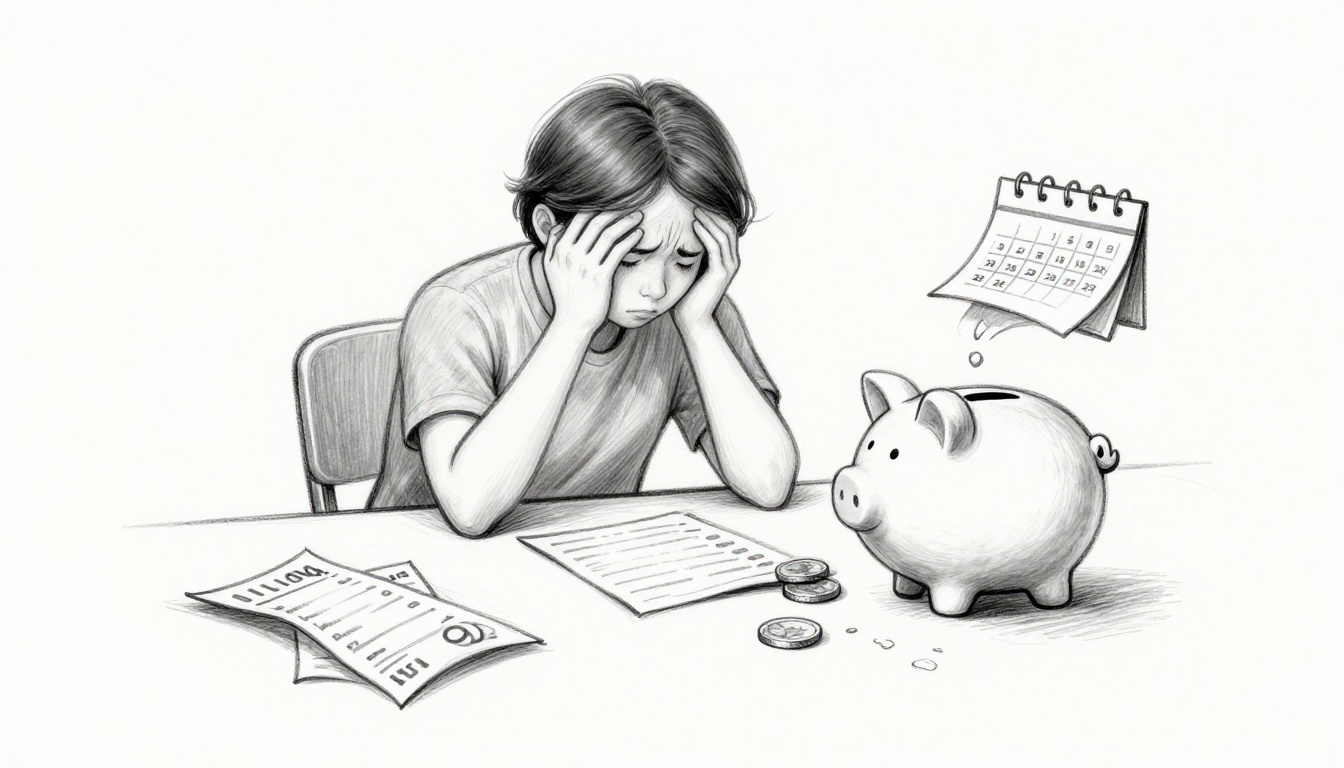
Money feels tight for a lot of people, and it’s not just bad math. At the start of 2026, 88% of U.S. adults said they felt financial stress. More than half point to high daily costs and inflation, and many say the stress only gets worse.
If you live paycheck to paycheck, you know the feeling. One surprise bill can wipe out a whole week of effort. And when you’re already behind, saving can feel like trying to fill a bucket with a hole.
Let’s break down the most common reasons people struggle to save money. Then you’ll see simple ways to make progress in 2026, even if things stay pricey.
How Skyrocketing Everyday Costs Squeeze Every Penny from Your Paycheck
When people ask, “Why can’t I save?”, the answer is often staring back from the receipt. High daily expenses are the top stressor for 54% of Americans. Rising costs of living (52%) also ranks right up there. Meanwhile, 53% say they’re more stressed than they were a year ago.
Inflation doesn’t hit evenly. It tends to hit the stuff you buy every day, like groceries, gas, and basic household items. So even if your income looks steady, your spending power can shrink.
Here’s what recent U.S. surveys show as the biggest pressure points:
| Financial pressure point | Share of Americans |
|---|---|
| High daily expenses | 54% |
| Low income | 46% |
| Impulse buys | 45% |
| No emergency savings | 39% |
| Rising debt | 35% |
That’s why budgets struggle. You can plan for a “normal month,” but cost increases turn normal into a moving target.
If you want a quick reality check, use your own last bill cycle. For example, grocery prices rose 2.4% over the year ending February 2026. If you spent $400 a month on groceries, that’s about $10 more per month. Small change on paper, big change to your “leftover money.”
At the same time, people try to cut back, but daily life keeps pulling them forward. A warm day, a busy schedule, and one “small” purchase turn into a pattern.

One helpful move is to track just one category first, like groceries or dining out. Once you see where the money leaks, the fix gets easier.
Also, you’re not alone in wanting a plan. In 2026, a slim majority of Americans set a budget, and that number rose compared to 2025, according to U.S. consumer spending and budgeting trends in 2026. The bigger issue is sticking with it when life gets loud.
The Hidden Impact of Inflation on Your Weekly Budget
Inflation makes saving hard for a simple reason. It raises your baseline cost of living, before you even start choosing what to buy.
Food and essentials tend to feel the worst. In the year ending February 2026, food prices rose 3.1%. Food at home (groceries) rose 2.4%, while eating out rose 3.9%. That’s a rough combo when wages don’t rise at the same pace.
Here are a few common “inflation hits me here” items:
- Groceries: prices creep up, even on familiar brands
- Eating out: menus feel “only slightly higher,” then totals surprise you
- Gas and travel: weekend plans cost more than you planned
- Household supplies: detergent, paper goods, and cleaning products add up fast
And if you’re already stressed about money, inflation doesn’t just raise bills. It shrinks confidence. It’s hard to save when your brain expects the next price hike.
Add this on top: 46% name low income as a top struggle. When your income barely covers bills, you don’t get the “buffer” that lets saving happen.
Still, it’s not hopeless. You can’t control inflation, but you can control how you respond each week.
Why Housing and Bills Feel Like a Black Hole for Your Money
Housing is the category that steals breathing room. Rent and mortgages take a huge chunk of income, especially in pricey areas. Even when housing inflation cools, the bill is still due every month.
Utilities add extra pressure too. Energy prices don’t rise in a straight line. Still, they can spike at the worst times. And since utilities are fixed in the sense that you must pay them, they don’t give you much flexibility.
This is why “saving” often feels impossible. If your fixed costs already eat most of your paycheck, then there’s little left to build an emergency fund or a true buffer.
So the math looks like this:
- Bills come first
- Then food and transport
- Then any surprises you missed in your plan
When fixed costs dominate, even small lifestyle choices can feel like drops in a bucket.
Why Debt Keeps You Trapped in a Cycle of Just Getting By
Debt adds stress in a way people can feel in their body. You’re not just paying money. You’re paying time, because it can take years to catch up.
In recent surveys, rising debt is a top stressor for 35%. Credit card debt stays high too. The total U.S. credit card balance hit a record $1.3 trillion by March 2026, and the national average credit card debt for people with unpaid balances was $7,886 in Q3 2025.
Also, about 47% of cardholders carry a balance month to month. When interest stacks on top of everyday costs, debt grows even when you’re “trying.”
This is the danger zone: once your minimum payment barely covers interest, you’re stuck. You can work hard, but the balance won’t shrink fast enough to help your future self.
Here’s the emotional part most people don’t say out loud. Debt makes it harder to save, because every “extra payment” feels like it goes nowhere. Then another surprise comes. The cycle continues.

The good news is simple: debt can shrink when your plan shifts from “survive” to “reduce.”
Credit Cards and Loans That Never Seem to Shrink
High interest is the hidden “fee” behind many debt problems. Minimum payments can keep you afloat while interest quietly does its job.
Imagine this month:
- You carry a balance
- You pay the minimum
- Most of that payment reduces interest rather than principal
Then your next month starts already behind. Even if you’re careful, time and interest keep pushing you back.
If you’re dealing with this, one small strategy can still help: focus on one debt at a time. Many people use a “debt snowball” or “debt avalanche” approach, because it turns chaos into a clear order. You don’t need a perfect system. You just need a start you can repeat.
It also helps to know what’s driving your borrowing. For many people, debt comes from routine costs, not big luxuries. Still, once debt shows up, the stress multiplies.
No Emergency Fund Means One Surprise Spells Trouble
Emergency savings are the shock absorber. Without them, surprises turn into new debt.
That’s why no emergency savings is a major struggle, named by 39% of Americans. Bankrate also reports that many Americans do not have enough liquidity to cover a $1,000 emergency. If you want a close look at the data, see Bankrate’s 2026 Annual Emergency Savings Report.
Another survey from U.S. News found people often fall short when a $1,000 emergency hits. You can view the details in U.S. News survey on savings for emergencies.
When you lack an emergency fund, almost any problem becomes a financial event:
- a medical bill
- a car repair
- a home issue
- a job disruption
Then debt fills the gap, and interest makes the gap bigger.
If you’re stuck right now, don’t wait for “perfect.” Even a small start can reduce how often you need to borrow.
The Sneaky Habits That Make Saving Feel Out of Reach
Let’s talk about the parts of money habits that feel harmless. A small purchase here. A treat there. Then months pass, and your savings stays at zero.
Impulse spending is common. Recent data shows 45% say impulses derail plans, and 59% want to cut back on small buys. That’s not a character flaw. It’s how daily life works when bills already feel heavy.
Social spending adds pressure too. Many people don’t want to feel “broke,” especially around friends. As a result, it’s common to struggle to skip group plans. When that happens often, saving becomes the thing you postpone.
Food and fun are the biggest targets because they’re easy to justify in the moment. A “quick lunch” is rarely quick on your budget.
Then there’s lifestyle creep. When income rises, spending often rises too. People upgrade their routines. They keep the new habits, even when costs change again.
Impulse Buys and Social Spending That Add Up Fast
Impulse buys don’t need to be huge. They just need to be frequent.
A good sign you’re getting pulled off track is when you say “I’ll save next month,” over and over. That usually means money isn’t escaping through one big door. It’s leaking through many small ones.
Dining out can become a default plan. In recent surveys, dining out shows up as hard to give up for many people. Once dining out becomes routine, it’s tough to cut without feeling deprived.
So instead of “never,” try “not every time.” Small limits often work better than all-or-nothing rules. For example, you might plan one meal out per week, not every time you’re busy.
You can also “pre-commit” to social spending. If you know you’ll meet friends on Friday, decide ahead of time how much you’ll spend. That way you don’t make decisions while hungry or tired.
Lifestyle Creep and Forgotten Subscriptions Stealing Your Future
Lifestyle creep is when your spending grows with your income, but your savings doesn’t. Even if you make progress, your new baseline still keeps you stuck.
Subscriptions make it worse because they’re easy to forget. You sign up for “one month” and then it becomes a yearly habit. Over time, those charges add up.
Common subscription leaks include:
- streaming services
- app memberships you don’t use often
- delivery fees that replace meal planning
- premium upgrades for tools you rarely touch
One simple fix is a “cancel sprint” once per quarter. Pick one month, check what you pay for, and cut anything you haven’t used recently.
When you stop leaks, you create room. That room is what turns saving from fantasy into routine.
Living Paycheck to Paycheck Without a Plan Dooms Your Savings
If you’re living paycheck to paycheck, saving can feel like a myth. Yet 30% of Americans say they’re just “getting by” financially. And 44% of Gen Z say living paycheck to paycheck is their biggest worry.
Low income is a big piece of this puzzle. 46% name low income as a top struggle. When your income doesn’t cover your baseline, you can’t build savings consistently.
But there’s another factor that keeps people stuck: planning gaps.
Many people want budgets. Yet a budget only helps if it matches real life. When costs rise, a “perfect plan” fails. Then people give up, because saving feels like effort with no reward.
Instead, aim for a plan that survives messy months. For example:
- Track spending for one category (groceries or gas)
- Set a tiny weekly savings target
- Build a starter emergency fund goal, like $100, then $500
Even small steps matter because they reduce the number of times you rely on credit.
If you’re in debt, your plan can still include saving. The point isn’t to save large amounts today. The point is to stop every surprise from turning into new borrowing.
Conclusion: The Path Out Starts With One Small Shift
If there’s one theme behind why people struggle to save money, it’s this: everyday costs, debt, and habit leaks leave no margin. High daily expenses lead the list, inflation makes basics more expensive, and debt grows when surprises hit. Then impulse spending and lifestyle creep quietly keep your savings from getting momentum.
The good part is that progress is possible. When you make a change you can repeat, you shift from constant catch-up to steady rebuilding. In 2026, many people already want to get better, and plan changes are strongly linked with improvement in financial stress.
So pick one move for this week. Cut one dining out or impulse moment, or start building a small emergency fund. Then track what happens.
Because that first small step can turn the next paycheck into something you can actually build on.