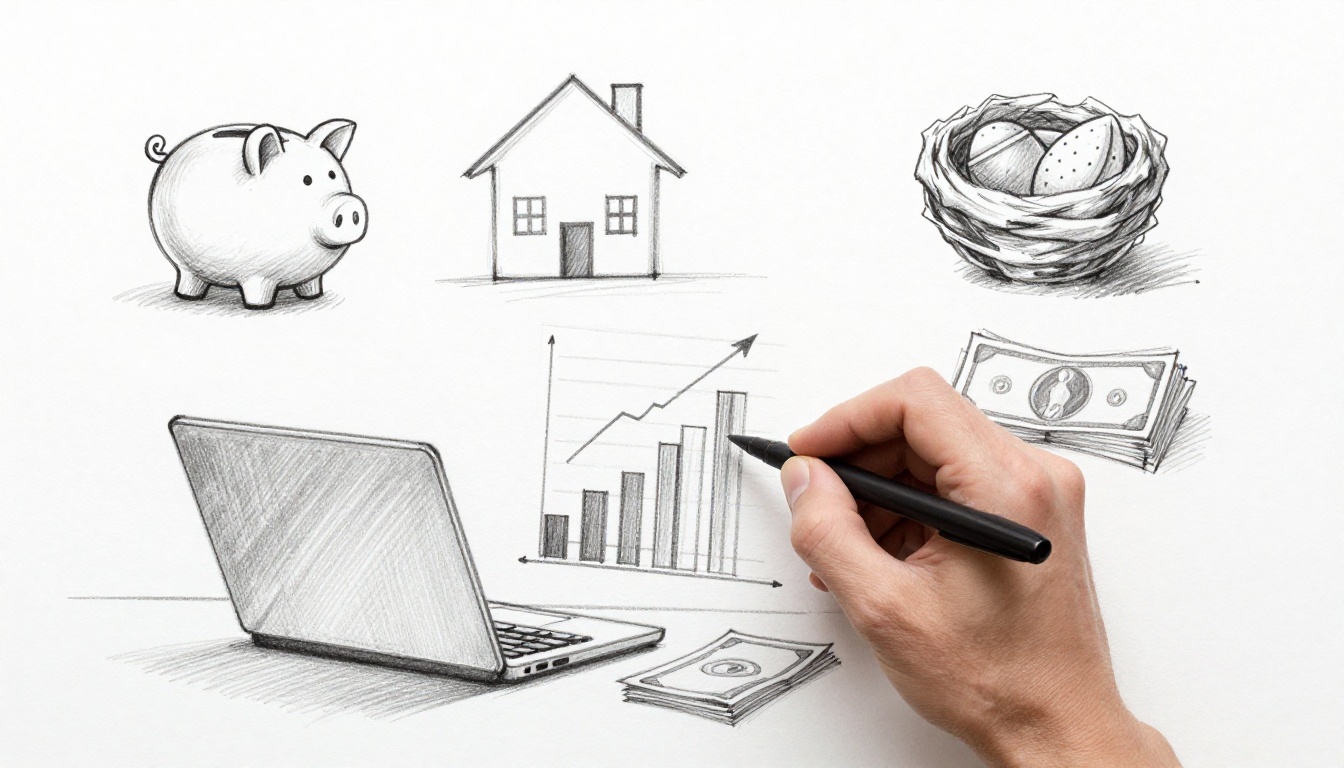
What happens when your paycheck hits your bank account, then disappears fast? If you can’t handle a surprise bill, the stress shows up in everything. Right now, many households feel that squeeze. In the latest data, the US personal savings rate is only about 4.5% of disposable income (January 2026). Meanwhile, US household debt sits around $18.8 trillion (end of Q4 2025), and inflation is still about 2.4% over the past 12 months.
Personal finance is how you manage your money to reach goals that matter to you. That might mean buying a home, staying out of debt, or retiring with options. It also covers the everyday stuff, like budgeting, saving for emergencies, making smart spending choices, handling debt, and investing over time.
So why does it matter now? Because small choices add up during high prices, changing income, and rising financial pressure. If your plan is shaky, a minor problem can turn into a big one.
This guide breaks personal finance down in plain English, so you can take control today.
The Core Pieces of Personal Finance Explained Simply
Personal finance is not one magic trick. It’s a set of habits that help you spend, save, and prepare, even when life gets messy.
Think of it like building a car you can actually drive. Budgeting is the dashboard. Savings is your spare tire. Debt management is the engine that needs repairs. Investing is the long-term road trip plan. And protection is your seatbelt.
Here are the main pieces, explained in everyday terms:
- Budgeting: knowing where your money goes each month.
- Saving: keeping funds aside for short-term needs and big surprises.
- Debt handling: paying off balances in a smart order, not just “hoping.”
- Investing: putting money to work for long-term goals.
- Protection: using insurance and basic plans so one event does not wreck everything.
The goal isn’t to be perfect. It’s to be steady. When you understand your finances, you make calmer choices. When you don’t, you often make choices from panic.
Why Budgeting Is Your Money’s Best Friend
A budget is a plan that says: “I will spend less than I earn.” That’s it. It’s not a punishment. It’s clarity.
Most people don’t lose money because they love overspending. They lose money because they don’t track reality. Without a budget, spending sneaks in. It shows up as takeout here, a “small” subscription there, and a few impulse buys you don’t notice until the month ends.
Here’s a simple way to picture budgeting. Imagine you’re planning a road trip. You wouldn’t just start driving and hope you land in the right city. You’d set a route, check gas, and estimate costs. A budget does the same job for your money.
One popular approach is the 50/30/20 rule:
- Needs (50%): housing, utilities, groceries, basic bills.
- Wants (30%): eating out, hobbies, shopping.
- Savings and debt payoff (20%): emergency fund, retirement, extra payments.
You can adjust the percentages for your life. The point is to set boundaries, so your money has a job.
Budgeting also helps you spot “leaks.” For example, maybe you buy coffee every day. Maybe you spend more on delivery than you thought. Once you see patterns, you can change them without feeling like you’re “giving everything up.”
If you want a practical place to start, the Consumer Financial Protection Bureau has clear guidance on budgeting basics through this CFPB budgeting resource.
Building Savings and Tackling Debt Head-On
Saving is your money’s safety net. Debt is the weight that can keep you from standing up.
Start with savings, because surprise costs don’t ask for permission. In 2026, multiple surveys suggest roughly 21% to 40% of Americans have no emergency savings. Some people do have an account, but it may be small. In one set of results, the average emergency savings amount was around $600. And here’s the part that hits hard: 43% can’t cover a $1,000 emergency using savings.
That’s why emergency funds matter. A small buffer can stop a bad week from becoming a long-term problem.
A good target is 3 to 6 months of essential expenses. If that feels too big, begin smaller. Even building toward $500 is a win. Then build again.
Now let’s talk debt. Debt isn’t always bad, but high-interest debt can trap you. Credit cards can be especially costly. The good news is that delinquency rates are not at crisis levels. Still, the numbers show why you should take debt seriously. As of end of 2025, about 2.94% of credit card balances were at least 30 days overdue.
So what should you do first?
Many people do best with a two-track plan:
- Keep saving something (even small).
- Pay down debt aggressively (especially higher interest balances).
Meanwhile, you can protect your progress with insurance and smart risk choices. Health insurance, auto insurance, and renters insurance can prevent one event from turning into an emergency. It’s not “extra.” It’s often the difference between a fix and a financial collapse.
Investing Basics to Make Your Money Grow
Saving buys safety. Investing aims for growth.
If saving is the safety net, investing is the long-term engine. Over time, investments like index funds or retirement accounts can help your money grow faster than inflation, which is the silent thief of purchasing power.
You don’t need to pick individual stocks to start. Most beginners do better with a simple retirement plan, plus low-cost broad funds if offered.
A practical first step is to ask: do you have access to a workplace retirement plan, like a 401(k)? If your employer matches contributions, that match can be a strong start because it adds money to your retirement plan.
If you’re starting from scratch, begin small. Even steady monthly contributions can build momentum. The key is consistency, not perfect timing.
One more point: investing is not a substitute for emergency savings. If you lack a buffer, then market swings can force you to sell investments early. That’s why personal finance usually follows an order: budget, save a baseline, manage expensive debt, then invest for the future.
Why Personal Finance Hits Home Hard in 2026
Personal finance hits home hard in 2026 because the basics are still tough. Income might rise slowly, but prices can stay high. Inflation is still around 2.4% over the past 12 months (latest CPI data at the time of the report). And household debt remains high, with mortgages making up the biggest share.
For household debt, the latest report showed total debt around $18.8 trillion (end of Q4 2025). Credit cards were about $1.28 trillion of that total. In other words, many households carry balances that can get expensive when interest rates are high.
When your finances lack a buffer, you feel it fast. You spend more time worrying. You delay goals. You might even borrow just to cover regular bills.
This is not about “being bad with money.” It’s about building a system that can survive reality.
The Debt and Savings Crisis Staring Us Down
Picture this: your car needs repairs, your rent increases, and your hours get cut slightly. Any one event can strain you. Several at once can break your plan.
That’s why emergency savings is so important. When many people have no emergency fund, they rely on credit to fill gaps. Then interest charges stack up.
And those gaps show up in debt patterns. For example, if you’re short on cash, you may use credit cards more. Even if delinquency stays relatively low, the cost of carrying balances can still grow month to month.
The savings issue is also real. With about 21% to 40% reporting no emergency savings, it means a lot of households have no cushion at all. Some estimates also show that many people can’t cover a basic $1,000 surprise using savings.
In addition, household debt overall stayed very high. If you want a reliable snapshot of US household debt trends, you can review the New York Fed Household Debt and Credit Report.
Here’s a simple table that shows how emergency savings varies by age, based on survey-style results:
| Group | Emergency savings reality |
|---|---|
| Adults overall | Roughly 21% to 40% report having no emergency savings |
| Under age 44 | About 35% lack a fund (since around 65% have some savings) |
The takeaway is clear: you don’t need a personal crisis to feel financial risk. You just need the wrong month.
How Weak Finances Fuel Everyday Stress
Financial stress doesn’t only show up in bank statements. It shows up in your day.
When you don’t have a plan, every bill feels like a test. You may double-check your balance more than you want to. You might avoid opening mail. You may put off healthcare visits or repairs because cash feels tight.
On top of that, low savings can hurt your options. If you can’t cover essentials, then choices get smaller. You might accept a worse job. You might skip training that could lead to better pay. You might stay stuck because leaving feels risky.
Inflation adds pressure. When prices rise, you need more income just to stay even. Latest CPI data showed about 2.4% inflation over the past year, which means budgets still face steady pressure.
Also, debt can create a cycle. If you use credit to cover normal life, you end up working longer just to service balances. It’s not just math. It’s mental load.
A strong personal finance routine reduces that load. It gives you a plan for surprises, so you’re not negotiating with panic every month. And it gives you room to move when opportunities show up, like a better job, a home you can afford, or a chance to invest in your skills.
If you want the most current inflation context, the BLS Consumer Price Index page is a good reference point.
Real-Life Wins from Getting Your Finances Right
Personal finance is not about deprivation. It’s about freedom.
When your budget matches your income, your money stops feeling like a threat. When you build a small emergency fund, you stop turning every surprise into a debt problem. When you manage high-interest debt, you free cash for the goals you actually care about.
Then your life gets bigger.
Maybe that means taking a trip without maxing out a credit card. Maybe it means helping family without draining your own future. Maybe it means moving to a better neighborhood when your budget can handle it.
There’s also a less visible win: confidence. Once you can predict your spending, you sleep better. You think clearer. You argue less about money.
Finally, this is how wealth gaps close for regular people. Discipline plus time creates progress. It’s not instant wealth. It’s steady momentum.
Achieve Big Goals Like Homeownership or Early Retirement
Big goals require boring steps done consistently.
Homeownership is a great example. You need money for a down payment, closing costs, and ongoing maintenance. If your budget is messy, you’ll struggle to save. If your debt is heavy, you might not qualify for the loan you want. If you have no savings, one repair can derail the timeline.
The same logic applies to early retirement. You don’t “retire early” because you found a secret stock pick. You retire early because you built savings and invested over time, while keeping spending in line.
Even if your goal sounds far away, start with what you can control today:
- track your spending
- reduce the biggest leaks
- automate savings when possible
- pay down high-interest debt
If you want a simple path, use your budget to decide what happens first each month. Then stick to the plan.
And remember, you don’t have to win every month. You just have to keep returning to the plan.
Sleep Better Knowing You’re Prepared for Surprises
The best reason to care about personal finance might be the most personal one.
When you can cover surprises with savings, you stop living in fear of “what if.” You handle setbacks with fewer delays. You can repair the car, replace the phone, or cover a medical bill without immediately going into debt.
As a reminder, many people cannot cover a $1,000 emergency from savings. That’s the gap that personal finance helps close. Start small if you must. Build gradually.
Eventually, you’ll notice the change. Instead of dread each billing cycle, you feel steady. Instead of panic decisions, you make calm ones. Instead of asking “Can I afford this?” you ask “Does this fit my plan?”
That shift is what turns money management into real quality of life.
Conclusion
Personal finance is your roadmap for stability, especially in 2026’s pressure cooker of debt, still-high prices, and limited savings for many households. When you budget, save, manage debt, and invest with a plan, you reduce stress and protect your future choices.
Start simple this week. Track your spending for seven days, then set one small savings goal, like building $1,000 over time. If you already have a little saved, add another small step.
Now the real question is yours: what’s the first money move you’ll make today to feel more in control?