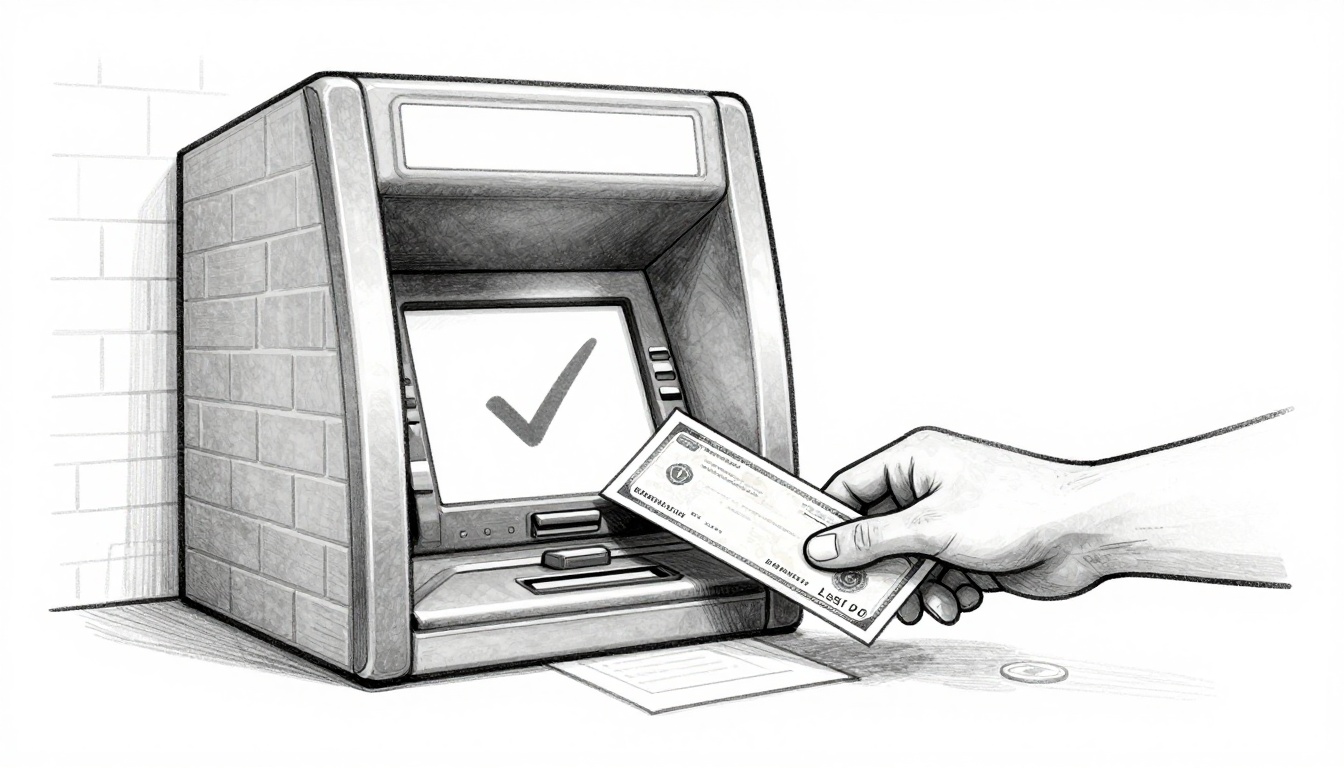
You ever deposit a paycheck at an ATM and watch your balance update right away? It feels instant, but what happens after that deposit leaves your hand is more interesting than most people think.
When you deposit money in a bank, your bank doesn’t just stash bills in a vault like a piggy bank. Instead, it uses your deposit to support lending, payments, and other financial activity. At the same time, you still get important protections and rewards.
So what exactly happens next, step by step? Keep reading, and you’ll see where your money goes, how banks earn interest, and what risks are actually worth knowing.
Step by Step: How Your Deposit Lands in Your Account
Depositing money can mean a few different things. You might add cash at an ATM, deposit a check through your phone, or hand a check to a teller. Each method has its own path, but the goal is the same: get verified funds into your account.
Banks start by checking that the deposit is real and belongs to you. Then they either credit your account right away or place a hold while they confirm the money clears. That’s why your balance may look updated instantly at first, but “available” funds can lag behind.
Also, banks track deposits for safety and legal reasons. For example, cash deposits over $10,000 can trigger anti-money laundering reporting, and the bank may ask for ID. This isn’t personal, it’s a compliance rule that applies to many cash transactions.
Cash Deposits at ATMs and Branches
When you deposit cash at an ATM, the process is simple. You insert your card (or use another method your bank allows), enter your PIN, and choose the cash deposit option. Then you slide in the bills and confirm the amount.
After that, the machine counts the bills internally and tells you whether it matches your total. In most cases, you get a receipt right then, and your bank credits your deposit the same day.
Here’s a key detail: the ATM’s job is to confirm your deposit quickly. It’s not “guessing.” It’s reading and counting the bills as the deposit happens. If the counts don’t match, you’ll usually see an error and can correct it.
At a branch, the teller does the counting. You hand over the cash, they verify it, and then the teller credits your account. Many banks treat teller cash deposits as available right away, because the verification happens face to face.
Finally, save that receipt. It can help if there’s ever a mismatch or a tech issue. Even when things go smoothly, receipts are your paper trail.

Digital Deposits with Your Phone App
Digital deposits feel like magic because the phone app makes them easy. But they still go through verification.
For mobile check deposits, you usually endorse the check, then open your bank app. You enter the amount, take photos of the front and back, and submit. After you submit, the bank reviews the images and runs standard check-clearing steps.
That’s why funds from mobile check deposits often become available in one to two business days. For larger or newer-account checks, the hold can last longer.
If you bank online and need cash, you might use partner ATMs or buy a money order. Then you transfer funds into your account through the bank’s process. In other words, the bank still needs a verified payment route, even if you started with cash.
One more practical tip: use secure Wi-Fi (or your mobile data) when you deposit through the app. Also, turn on in-app notifications so you can spot delays quickly.
The Magic Trick Banks Pull: Lending Most of Your Money
Now the big idea. Once your deposit is confirmed, your bank can put it to work. This is where your money stops being “just your money” and starts being part of how the financial system moves.
Most of the time, banks keep only part of deposits in reserve. Then they lend out the rest. That’s called fractional reserve banking, and it helps the economy by turning deposits into credit.
If you deposit $1,000, the bank might keep a portion as reserves and use the rest to make loans. Those loans can then help fund things like homes, cars, and business growth. Banks also invest part of their money in safer assets, like government bonds.
So your deposit can help fund lending, while you still earn interest on savings accounts. It’s not a trick where your bank steals your cash. It’s a system where banks manage risk, liquidity, and reserves so depositors can access money when they need it.
Many people only think about cash withdrawal risk when they imagine “bank failure.” But the everyday reality is that banks expect most customers to keep money on deposit, not withdraw it all at once.
If you want a clear, plain-English explanation, see NerdWallet’s breakdown of fractional reserve banking.
Fractional Reserves Explained Without the Math
A simple way to picture fractional reserve banking is this:
Your deposit increases the pool of funds the bank can use. The bank keeps a reserve buffer, then lends the rest. The borrower spends the loan money, and some of that money returns to the banking system. That cycle can support more lending over time.
For example, imagine you deposit $1,000. The bank keeps a smaller share as reserves, and it lends out $900 (the exact share depends on rules and the bank’s situation). That $900 becomes spending power for someone else. When that spending lands in deposits, the system can lend again.
That’s why people say banks “create money” through lending. They don’t print bills. Instead, they create deposit balances through loan activity.
This concept is also why bank stability matters. The system relies on trust and on banks holding enough reserves to handle withdrawals. If too many people panic at once, the bank has less time to manage liquidity.
If you’d like another definition style explanation, Investopedia explains fractional reserve banking in a way that connects it to credit creation.
Where Your Deposit Dollars End Up
Once your deposit is in the system, banks typically use it in several directions:
- Home loans and mortgages, which help people buy houses and move.
- Car financing, which supports transportation for many households.
- Business loans, which fund equipment, payroll, and expansion.
- Government securities and other investments, which can be lower-risk than most loans.
Banks also hold some assets to manage everyday cash flow. That’s how they handle things like ATM withdrawals, card purchases, and bill payments.
Meanwhile, many banks pay you some interest for using your deposit. That money isn’t free. The bank earns returns from lending and investing. Then it shares part of those returns with depositors, mainly through savings and money market accounts.
This is also why rates change. When interest rates move, banks may earn more or less from investments. Then they pass part of that difference to you.
Your Rewards: Interest Earnings and Full Protection
If you deposit money into a bank, you want two things. First, you want access to your funds when you need them. Second, you want to earn something for keeping your money there.
The “something” part shows up in interest rates, especially for savings accounts and money market accounts. Some banks offer higher rates than others. In March 2026, top high-yield accounts were reaching around 5.00% APY, while the national average for savings accounts was much lower.
For a snapshot of what was available around late March 2026, Fortune reported that top high-yield savings accounts reached up to 5.00% APY on March 27, 2026: top high-yield savings rates.
However, always check current rates. Promotions end. Markets shift. Even big rate changes can happen quickly.
Locking in Solid Interest Rates Today
What should you look for? Start with the APY, not the interest rate headline you might see in ads. APY includes compounding, so it’s the cleaner number for comparing accounts.
In March 2026, many high-yield options hovered far above the national average. Still, the best rates usually come from online banks or accounts with fewer brick-and-mortar costs.
As you compare offers, also think about the account rules:
- Some accounts require a minimum balance.
- Others limit the number of withdrawals.
- Some rates drop after a promo period.
Finally, if you want stability, read the terms. You’re looking for what happens when the rate changes.
The best time to compare rates is when you open the account, and then again later.
FDIC Insurance: Peace of Mind Backed by Government
Interest is nice, but safety is the real foundation. In the US, many banks carry FDIC insurance. That means your covered deposits are protected if the bank fails.
The FDIC insures up to $250,000 per depositor, per insured bank. If you have more than $250,000, you might still be fully covered if you split money across ownership categories or separate insured banks.
For a clear overview of what’s covered and what isn’t, start with Understanding Deposit Insurance.
If questions pop up, the Deposit Insurance FAQs can help. And if you want a quick reference for limits, the FDIC has Deposit Insurance At A Glance.
Also, coverage depends on the type of account. Joint accounts can have different coverage amounts. Retirement accounts can also have special treatment, depending on how they’re set up.
The good news: bank failures are rare, but FDIC insurance exists for exactly that worst-day scenario. That’s why many people feel comfortable keeping savings in an insured bank rather than holding cash at home.
Watch Out For These Deposit Risks and Traps
Most deposits go smoothly. Still, a few risks show up often enough to take seriously. Some are about safety. Others are about money value or access timing.
First, remember that FDIC insurance covers deposit accounts at FDIC-insured banks. It doesn’t cover everything in the financial world. For example, investments like stocks and mutual funds aren’t usually FDIC-insured.
Next, watch out for fraud. When your bank account is connected to a phone app, scammers may try phishing or fake login pages. They may also target you with fake “deposit failed” messages.
Then there are holds. Banks sometimes place holds on checks and on large deposits. This can feel like money disappears, even when your balance shows it already.
Finally, inflation can quietly reduce what your savings buys. Even if your deposit earns interest, the real value might still shrink if inflation is higher than your rate.
Digital vs Physical: Comparing Safety Headaches
Physical deposits come with one kind of risk. If someone steals your cash or your receipt, that’s a real problem. But it’s usually not a cyber risk.
Digital deposits bring a different set of headaches. You might face app outages, network issues, or phishing scams. Also, if you reuse a weak password, it creates an opening for fraud.
You can reduce risk fast:
- Use strong, unique passwords and a password manager.
- Turn on 2FA when your bank offers it.
- Watch for weird emails or text messages asking for login codes.
- Use bank apps from official app stores.
- Avoid submitting deposits from random public kiosks.
Even if your bank uses strong security, your habits matter. Most account takeovers start with a trick that gets the customer to do the wrong thing.
Meanwhile, transfers between banks may be slower or faster depending on the system used. Some payments can move quickly through modern rails, including Federal Reserve services like FedNow. That can speed up transfers, but availability still depends on your bank’s policies.
Inflation, Holds, and Other Sneaky Issues
Inflation is the quiet risk many people forget. If you earn a low savings rate while prices rise, your savings loses buying power. That’s why high-yield accounts can matter, especially for emergency funds.
Then there are holds. For checks, a hold can prevent you from spending the funds right away. Under Reg CC, many checks have standard holds of up to two business days. Larger deposits and new accounts can face longer holds.
Also, cash deposits over $10,000 can require additional reporting. Banks may request ID for compliance. This isn’t a trap, but it can slow down your deposit process.
One more thing: don’t confuse “available now” with “final.” Banks credit your account based on verification and clearing schedules. If something later doesn’t clear, banks may reverse or adjust availability.
A deposit isn’t always instantly spendable, even when your balance updates.
The upside is that smart habits make this easier. Keep receipts for cash deposits. Save confirmation emails for app deposits. If you plan a big purchase, deposit early and leave time for holds.
Conclusion
When you deposit money in a bank, your balance may update fast because the bank verifies your transaction right away. After that, your deposit supports lending and other financial activity that helps the economy move.
You also get key protection through FDIC insurance, up to $250,000 per depositor per insured bank, if your account is covered. At the same time, interest rates and deposit holds can shape how much you earn and when you can spend.
Before your next deposit, check your bank’s FDIC status, compare APYs, and set up security alerts. Then put your trust in the system, with eyes open.
What happens when you deposit money in a bank, based on your last receipt or app notification?