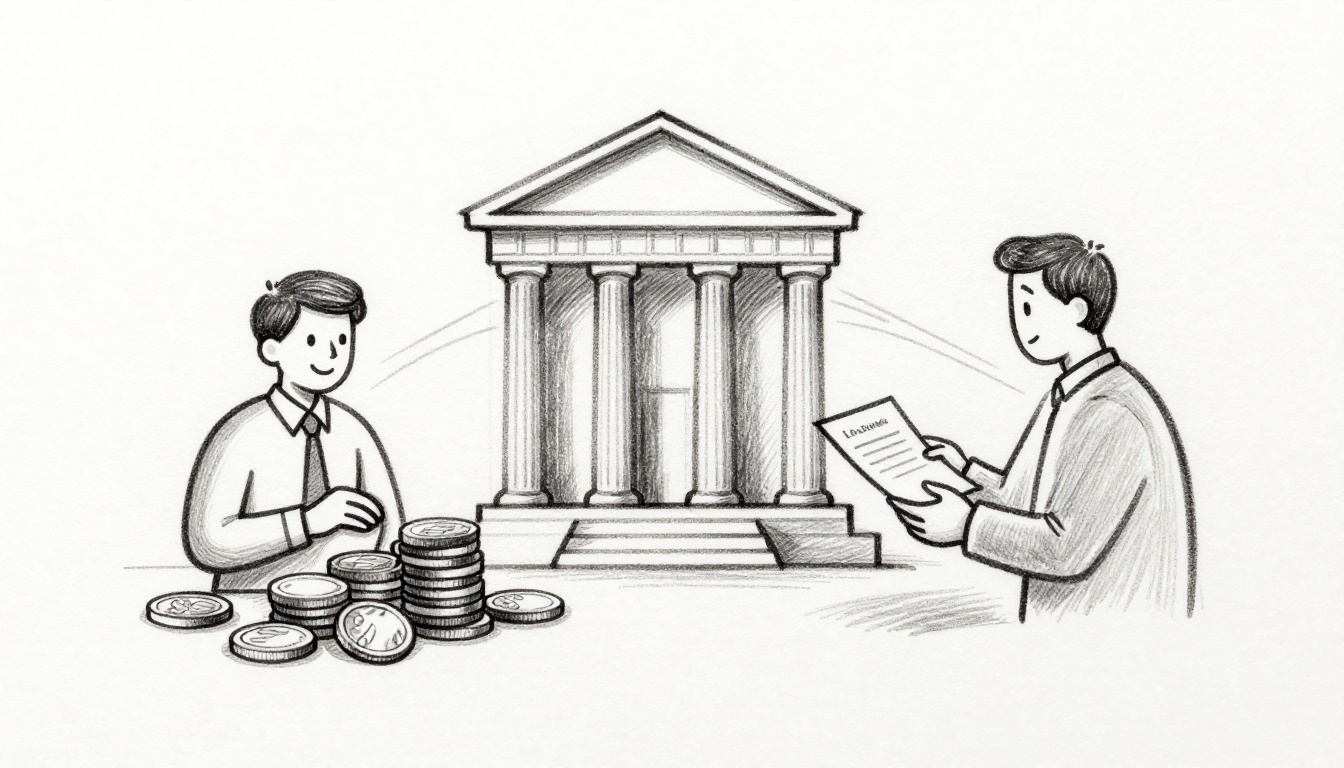
Ever deposit cash at a bank and wonder where that money really goes? Banks hold your funds, yes, but they also put them to work. That’s how how banks work connects to how banks make money.
Here’s the key idea: banks act like a bridge between people with extra money and people who need it. Then they earn income through that bridge, mainly from interest, plus fees and investments. In 2026, many banks are also pushing deeper into mobile payments, open banking, and AI to do more with less cost.
So if you want to understand what drives rates, fees, and account choices, you’re in the right place. Let’s break it down step by step, starting with deposits, loans, and everyday transactions.
How Banks Handle Deposits, Loans, and Everyday Transactions
Think of a bank as a “money hub.” You bring money in, the bank keeps some and lends out the rest, and it moves money between people and businesses.
Most customers mostly see one side: deposits in checking and savings accounts. Borrowers see the other side: loans like mortgages, auto loans, and personal loans. Everyone uses the middle: payments, transfers, card processing, and bill pay.
Here’s a simple way to picture it. Your $1,000 deposit doesn’t sit alone in a vault. Instead, it helps fund lending. Someone else might use that funding to buy a car, refinance a home, or expand a business.
Banks also run with fractional reserve banking. That means they do not lend out every dollar you deposit. They keep enough cash and liquid assets to handle withdrawals and payments. Because withdrawals happen at different times, banks can usually predict daily needs.
To make it concrete, here’s what the system looks like in everyday terms:
- Deposits: You park money in accounts. The bank pays interest (often low).
- Loans: The bank lends to qualified borrowers at higher rates.
- Payments: The bank moves money safely through checks, ACH transfers, wires, and cards.
- Risk control: The bank tries to avoid losses from defaults and fraud.
If you want a quick reference for deposit safety, the FDIC explains how deposit insurance works, including the common $250,000 limit per depositor, per insured bank, per ownership category: FDIC deposit insurance rules.
Safeguarding Your Deposits and Paying Interest
Deposits are often the bank’s “cheap funding source.” When you keep money in a checking or savings account, the bank can use those funds to support loans and other activities.
However, deposit accounts are not all priced the same. Savings accounts usually pay more than checking accounts. Also, high-yield savings accounts can pay far more than big bank starter rates. In late March 2026, average U.S. bank savings deposit rates were roughly 0.4% to 0.6% APY, while some high-yield accounts offered up to around 5% APY (depending on the product and balance). That gap matters, because it affects interest cost.
So why do banks still profit if deposit rates rise? Because loan rates typically sit higher. The bank earns the difference between what it pays for deposits and what it charges for loans.
A lot of people hear simplified examples like “banks pay 3% on deposits and charge 7% on loans.” That’s a clean way to understand interest spread math. Still, in real life, your bank might pay far less than 3%. The point is the spread, not the exact percentage.
Most importantly, banks build trust through rules and insurance. If your bank is FDIC insured, your deposits can be covered up to the legal limit. Still, you should review your account ownership type so you know what’s insured.
Turning Deposits into Profitable Loans
Loans are the main engine behind many banks’ profits. After a bank decides it can handle liquidity needs, it turns deposits into loans for people and businesses.
In March 2026, average U.S. personal loan rates were roughly 12% to 14%, depending on credit score. Mortgage rates around late March 2026 were about 6.4% for a 30-year fixed loan. Auto loan rates weren’t clearly listed in the available data for that exact month, but they often track with broader credit conditions and borrower risk.
Loan types tend to include:
- Mortgages for homes (often long-term, sensitive to interest rates)
- Auto loans for vehicles (secured by the car)
- Personal loans (unsecured for many borrowers)
- Business loans and lines of credit (based on cash flow and risk)
To decide who gets approved, banks use underwriting. That often includes credit scores, income checks, payment history, and sometimes collateral. The bank also looks at expected losses. If default rates rise, profit can shrink fast.
A simple analogy helps. Think of lending like buying risk. You only profit if you get paid more than the cost of money, plus enough to cover losses.
In other words, banks don’t just “lend.” They price loans to match risk and market conditions. When market rates change, banks often adjust what they charge, which can shift profit in a matter of months.
Processing Payments and Other Essential Services
Banks also make money by making transactions work. That includes:
- ACH transfers for direct deposit and bill pay
- Wire transfers for urgent or large moves
- Card payments and merchant processing (bank systems sit behind the scenes)
- Checks and payment rails that still matter for some customers
- Online banking and mobile apps that keep accounts usable
These payment systems also keep data structured. In 2026, U.S. banks continue moving toward ISO 20022 standards for faster, richer transfer data. That helps when banks need to match transactions, reduce disputes, and speed up reconciliation.
The practical effect is simple. Payments help the economy move. And the bank benefits through processing revenue, account stickiness, and lower customer support costs.
The Main Ways Banks Turn Operations into Cash Flow
Banks don’t rely on one magic trick. Instead, they combine revenue sources.
For example, U.S. Bancorp (the main part of U.S. Bank) reported about 58% of revenue from net interest income and 42% from fees in its latest available breakdown (late 2025 reporting). That mix shows why you’ll often hear “interest income first, then fees.”
Here’s a quick, simplified look at how money often flows at a large bank:
| Revenue source | What it is | Why it matters |
|---|---|---|
| Net interest income | Interest from loans minus what the bank pays on deposits | Usually the biggest part |
| Fee revenue | Fees from accounts, cards, transfers, and services | Can grow even when rates slow |
| Investments and trading | Gains and yields tied to securities and market activity | Helps, but varies by year |
The takeaway is diversification. When one income stream slows, other streams can still support profits.
Earning Big from Interest Rate Spreads
The “interest spread” is the famous concept. It’s the difference between what banks pay depositors and what they earn on loans and securities.
Here’s the math as a simple example. If a bank pays 3% on deposits and charges 7% on loans, that creates a 4% spread. With $100 million in deposits:
- Deposit cost at 3%: $3 million
- Loan income at 7%: $7 million
- Spread income: $4 million (before expenses and losses)
This is a simplified picture. In real life, banks have operating costs and some loans will default. Still, the spread concept explains why changes in rates can move bank profits quickly.
Also, spreads can expand or shrink based on competition for deposits. If banks must pay higher rates to keep customers, their deposit cost rises. Meanwhile, they might not raise loan rates at the same speed. That timing gap can help or hurt.
Collecting Fees for Services You Use
Fees are the second major income stream. Some fees are tied to optional services. Others come from payment systems and account usage.
Common fee examples include:
- Overdraft fees (often around $35 per incident)
- ATM fees when you use out-of-network machines (often a few dollars)
- Wire fees for faster transfers (often around $25 depending on the bank)
- Monthly account maintenance fees (if you do not meet balance or direct deposit rules)
Banks also earn from cards. Card-related fees can include interchange paid by merchants (banks receive a share of each transaction). Depending on card type and network rules, that percentage can be roughly 1.5% to 3% for certain arrangements.
If you want a consumer-friendly explanation of overdraft practices and what to watch for, see the CFPB overview here: CFPB on overdraft fees.
A practical tip: read how your bank defines “available balance.” That small detail can decide whether a fee hits you.
Gains from Investments and Market Trading
Even after lending, banks invest money in securities. They often buy things like government bonds and high-quality corporate bonds. Those investments can generate interest income and help banks manage liquidity.
Some banks also earn through market-related activities. That might include:
- Trading securities to manage risk
- Helping companies with underwriting or bond issuance
- Selling and structuring financial products for clients
- Packaging loans into securities (like securitizations), depending on the bank and market rules
In practice, investment and trading income can swing year to year. Some years look strong. Other years look flat. Still, it adds another way for banks to earn returns besides loan spreads and basic fees.
How Digital Shifts and 2026 Trends Are Reshaping Banks
In 2026, banks are not standing still. Many are trying to grow revenue and cut costs using better tech and partnerships. That’s also changing how banks attract deposits and manage risk.
A big driver is how people pay. Many customers now expect instant transfers, easy mobile deposits, and clear alerts. Banks that deliver that experience keep customers longer.
Mobile Apps and Digital Wallets Taking Over
Mobile banking and digital wallets reduce branch dependence. That matters because branches cost money to run, staff, and maintain.
In 2026, surveys and industry reporting point to a large share of payments happening through mobile channels. One data summary suggested about 80% of payments are tied to mobile use. Whether your own spend pattern matches that number or not, the direction is clear.
Mobile apps also help banks sell add-ons with less effort. For example, a bank might offer:
- Savings goal tools
- Automatic transfers
- Better fraud alerts
- Card controls in the app
That also improves cross-selling. When your bank helps you manage money daily, you’re more likely to use other services.
Fintech Partnerships Opening New Doors
Banks often team up with fintech companies. The goal is faster product rollout and better customer experiences.
Two big themes stand out in 2026:
- Open banking and data sharing through APIs (done under rules and consent)
- Embedded finance, where banking features show up inside other apps, like accounting tools or commerce platforms
Open banking can also support fraud detection because banks and partners can verify details across systems. In addition, ISO 20022 standards support richer payment data, which improves matching and reduces errors.
If you use accounting software or business apps, you may already see examples of “bank links” for live balances and automated pay features. Partnerships make that smoother.
AI and Smart Tech Boosting Efficiency
AI is now doing more work inside banks. It can flag fraud, help review loan applications, and improve customer support.
Industry reporting in 2026 describes different AI roles, including:
- Predictive AI that spots patterns customers might need next
- prescriptive AI that suggests steps
- protective AI that blocks risky behavior in real time
Banks also use AI for faster fraud defense, including digital identity checks that rely on behavior and data signals.
The biggest business value is speed and accuracy. Fewer manual reviews means lower costs. Fewer fraud losses means better net income.
Key Challenges Banks Navigate for Continued Profits
Banks face pressure from both sides. Regulation affects how much capital banks must hold. Competition affects how much they can charge and what they must pay to keep deposits.
At the same time, banks still have to deal with real-world risk. Inflation can raise costs. Fraud attempts keep changing. Loan defaults can rise during economic stress.
Tough Regulations and Compliance Hurdles
Banks must follow rules around capital, liquidity, and consumer protection. Compliance is not optional. It takes money, staff time, and ongoing upgrades.
Open banking requirements also create operational work. Banks need to manage consent, data security, and partner access. On top of that, fraud rules and enforcement push banks to improve detection speed.
So even when a bank wants to grow, it has to do it inside the guardrails.
Fierce Competition and Squeezing Costs
Competition comes from fintechs and nonbanks, including payment apps and lenders that target specific customer needs. Some competitors try to lure deposits with higher rates or better user experiences.
Meanwhile, banks work against rising costs like staffing, cybersecurity, and technology maintenance. Many also close or reduce less-used branches, which can help long-term costs but can feel disruptive to customers.
Automation and AI help, but implementation takes time. In short, banks must adapt or lose customers and revenue.
Conclusion: The Simple Mechanics Behind Bank Profits
Banks work like a bridge. They take in deposits, lend out money to borrowers, and run payments that keep life moving. Then they make money mainly through interest income, plus fees, and sometimes investing or market activity.
In 2026, the basics still matter, but tech and competition shape the details. Mobile banking, open banking partnerships, and AI are changing how banks manage risk and serve customers faster.
So when you notice a rate change or a fee rule, you can connect it to the bigger system. Next time you bank, you’ll know more about how banks work and make money, and that helps you bank smarter.