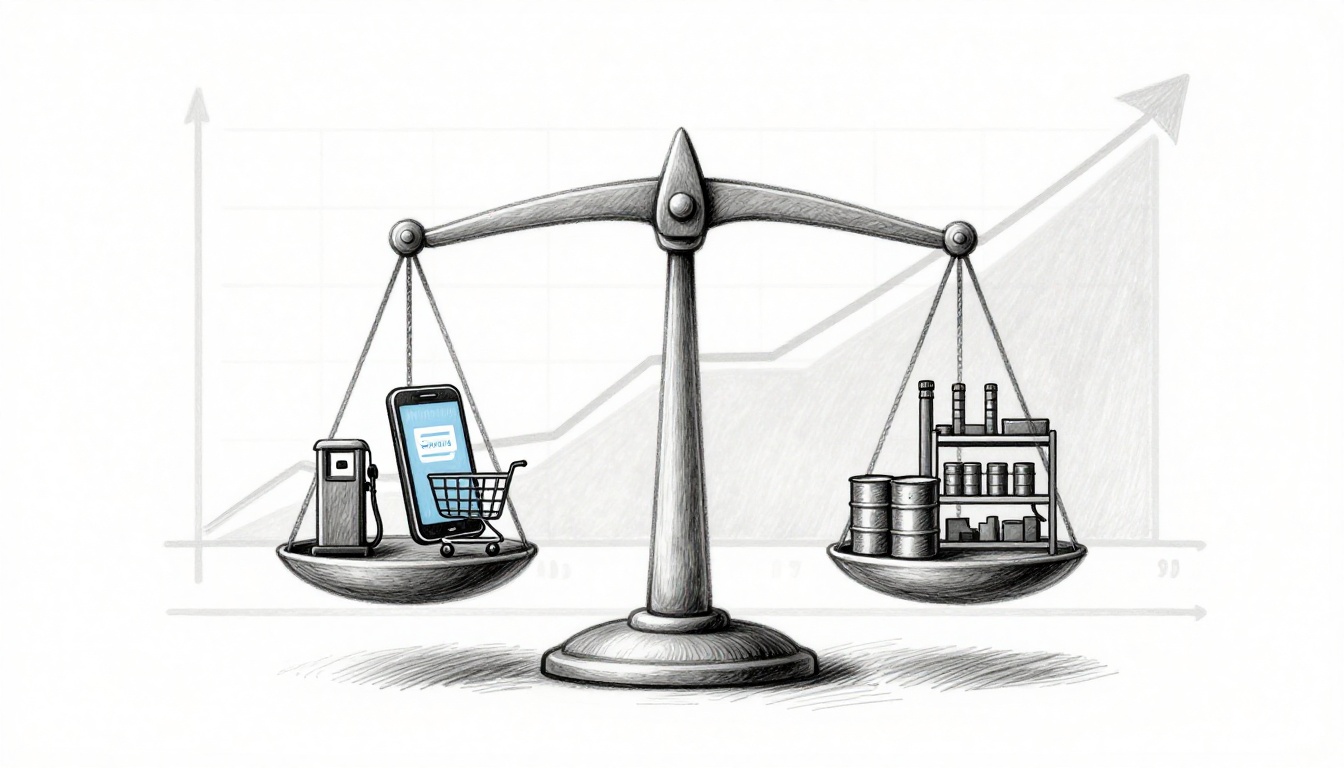
Did you notice how gas prices can jump in summer, then feel calmer in winter? In 2026, the pattern still looked familiar: heavy summer driving demand pushed prices up, then cooler months brought lower demand and softer prices. Supply and demand explain that swing better than almost anything else.
In plain terms, how supply and demand affect prices comes down to one idea: prices change to balance what people want with what’s available. When more people want something than supply can cover, prices rise. When supply is plentiful or interest drops, prices fall.
So if you’ve ever wondered why groceries cost more this month than last, or why tech gear gets cheaper after a surge, keep reading. We’ll break down demand, supply, equilibrium, and the real 2026 examples showing the same forces at work.
Demand 101: Why Do Prices Influence What Buyers Want?
Demand is about what buyers are willing to buy at different prices. The law of demand says a higher price usually means people buy less, and a lower price usually means people buy more. Think of demand like a ramp that slopes downward: as the price goes up, the number of buyers who still find it “worth it” tends to shrink.
Here’s why that happens. A price isn’t just a number. It’s a trade-off. When prices rise, buyers switch to cheaper brands, buy less often, or delay purchases. When prices drop, more people can afford it, and it also becomes easier to justify the purchase.
For a real-world example, when smartphone prices fall, more people upgrade sooner. Retailers also often respond by promoting models that are now “easier to buy.” That extra demand can bring the product price back up, or at least keep it from dropping further.
Demand shifts are what really move prices beyond small day-to-day changes. Even if the price stays the same, demand can grow because buyers gain reasons to want more. Common demand shifters include higher incomes, changing tastes, stronger ads, and seasonal patterns. In 2026, the continuing e-commerce boom also boosts demand for things like warehouse space, which can tighten availability and support higher prices.
If demand rises while supply stays fixed, prices usually climb. If demand falls while supply stays fixed, prices usually drop.
For a simple, deeper explanation of how these demand and supply ideas connect to prices, see Investopedia’s law of supply and demand guide.
Key Shifts That Pump Up or Cool Down Demand
Demand doesn’t only change because of the sticker price. It also changes when the “reasons to buy” move. When you track these shifts, you spot price pressure before it shows up at checkout.
1) Income changes: If people earn more, they often buy more of most normal goods. That tends to shift demand right (up), pushing prices higher when supply doesn’t rise fast.
2) Tastes and trends: If a product becomes popular, demand rises even at the same price. For example, new preferences for certain home products can quickly tighten supply.
3) Prices of related goods: Substitutes and complements matter. If the price of a substitute rises, demand for the first item often rises too. If complement prices rise, demand for both can weaken.
4) Population growth: More households usually means more buyers. That creates steady demand pressure over time.
5) Expectations: If buyers expect prices to rise later, they may buy now. Expectations can amplify short-term spikes, especially in housing repairs, electronics, or commodities.
You can even see this in energy. In 2026, AI data centers keep growing, and that increases electricity demand. That extra “want” for power can push prices up, especially when the grid needs time to add capacity.
Supply Essentials: How Do Higher Prices Lure More Sellers?
Supply is about what sellers are willing and able to produce and sell at different prices. The law of supply says higher prices often bring more output. In words, it’s like an upward slope: when prices rise, it becomes more profitable to make and ship more.
Why does that happen? Higher prices reward producers. They can cover costs more easily, justify expanding operations, and attract new sellers to enter the market. Farmers might plant more of a crop. Factories might run longer shifts. Retailers might restock faster.
For example, if tomato prices rise due to a weak harvest, growers often expand production next season when they can. In the short run, they might not be able to grow more overnight, but in the longer run, higher prices send a clear signal.
However, supply changes for more than one reason. Tech improvements can lower production time and costs. Input costs, like energy or labor, can shrink supply. Rules and taxes can also change who can sell and how much they can sell.
Now add 2026 context. Copper supply has faced tight constraints while demand grows. Data centers and green energy projects need large amounts of copper for wiring, grids, and power systems. When supply lags and shortages form, prices tend to stay high or swing sharply.
The other side also matters. If supply falls, prices often rise. That’s why disruptions like mine delays, weather damage, or shipping issues can show up as higher prices across many linked products.
To see more simple real-world examples of these mechanics, check The Econ Professor’s supply and demand breakdown.
Common Triggers That Boost or Shrink Supply
Supply shifts when something changes what it costs or how easy it is to produce and deliver goods.
1) Production costs: If inputs get more expensive, sellers often cut output. Fuel, chemicals, shipping, and labor can all push costs up.
2) Technology and process changes: Better equipment can increase output at the same cost. That can shift supply right.
3) Weather and events: Frost, drought, storms, and fires can reduce crop yields or delay operations. A single season can matter a lot.
4) Number of sellers: If more companies enter, supply can expand. If companies exit, supply can shrink fast.
5) Policies and rules: Tariffs, subsidies, permits, and environmental rules can all change supply. In 2026, trade rules and compliance costs can also affect how quickly suppliers respond.
Surplus and shortage help you visualize what’s happening. Surplus means extra supply relative to demand, and it often pushes prices down. Shortage means supply can’t keep up, and it often pushes prices up.
The latest electricity story in 2026 fits this pattern. Even with renewable growth, grid upgrades take time. Meanwhile, AI-driven demand keeps rising. That mismatch creates price pressure, especially in regions with limited capacity.
The Balancing Act: Equilibrium Where Supply Meets Demand
Markets aim for a balance point. That’s called equilibrium, the price where supply and demand match well enough that buyers and sellers can meet without big shortages or surpluses.
You can think of it like a seesaw. If one side becomes heavier, the seesaw tips. If demand rises, sellers notice they can charge more. Then supply often expands (eventually) until the market finds a new balance.
Shortages and surpluses are the “tell” that the market has not reached equilibrium.
- A shortage happens when demand is greater than supply. Prices rise, because buyers compete for limited stock.
- A surplus happens when supply is greater than demand. Prices fall, because sellers compete to move extra inventory.
Tomato frost is a classic example. If frost ruins part of the crop, supply drops. Demand doesn’t vanish, so prices rise. If a strong harvest later boosts supply, prices often soften.
When demand and supply shift at the same time, the price impact can be bigger. For instance, demand up plus supply down can cause a sharp jump, because the market moves away from equilibrium on both sides. That’s also why some price spikes feel sudden even if the ingredients were changing quietly in the background.
For a clear guide to the idea of equilibrium and how the market finds it, see The Motley Fool’s explanation of supply and demand.
Spotting Shortages and Surpluses in Real Markets
You don’t need a chart to spot imbalance. You just need a few signals.
A shortage often looks like:
- empty shelves or longer delivery times
- fewer choices or fewer brands
- price hikes that don’t “wait” for next month
- suppliers making excuses about lead times
A surplus often looks like:
- heavy promotions and deeper discounts
- more inventory available than usual
- price cuts that stick
- sellers slowing down production because demand weakens
In 2026, copper markets show how shortages can drive volatility. When supply is tight, small disruptions can move prices quickly. That’s because there isn’t much cushion. Buyers still want the metal, but suppliers struggle to add more fast.
Meanwhile, many warehouse markets in 2026 show the opposite. E-commerce demand can stay steady, but if there’s plenty of empty space available, rents won’t spike as much. Supply acts like a cushion, reducing price swings.
Proof in 2026: Real Examples of Supply and Demand at Work
Let’s make this concrete with a few 2026 stories where supply and demand clearly tugged prices in different directions.
Copper: Tight Supply Meets Fast Power Demand
Copper prices in 2026 have stayed high, with forecasts clustering around roughly $10,000 to $12,500 per metric ton. One reason: supply growth has lagged while demand rises from data centers for AI and from green energy buildouts. In market terms, demand increased, while supply tightened into a deficit.
That kind of deficit matters. When a market expects not enough copper to cover future needs, buyers bid harder. Sellers can hold higher prices because buyers don’t have many alternatives.
In other words, the shortage isn’t just about one shipment. It’s about the long gap between building new mines and new demand arriving. That slow adjustment process keeps price pressure alive.
Electricity: Demand Growth Outruns Grid Capacity
Electricity is another 2026 example where demand and supply didn’t move in sync. US electricity prices are expected to rise in 2026, with the residential national average hitting about 18 cents per kilowatt-hour, up 37% from 2020.
The demand side has a clear driver: AI data centers. They use power around the clock, so demand ramps up even when broader economic growth slows.
On the supply side, the grid has bottlenecks. Upgrades take money and time. Interconnection delays can also slow new capacity. Renewables add supply, but building them and updating the grid costs time and money, so the payoff often arrives later.
When demand pressures arrive sooner than supply fixes, prices rise. That’s the simple equilibrium story, played out in energy.
Industrial Warehouses: Steady Demand, More Room for Negotiation
Not every market spikes. In 2026, US industrial warehouse rents have grown slowly, about 1 to 1.5% per year, averaging around $10.18 per square foot nationally. The key is balance.
E-commerce demand stays solid for modern warehouses. Yet there’s also enough space in many areas for tenants to negotiate. That extra supply limits price jumps. It’s a reminder that supply doesn’t just respond slowly, sometimes it’s already there, which helps keep prices calmer.
Gas Prices: Seasonal Demand Creates Predictable Swings
Finally, gasoline shows how demand changes can drive price moves fast. In the US, prices tend to rise in late spring and summer because people drive more for road trips and vacations. Refiners also switch to summer-blend gasoline, which costs more to produce than the winter blend.
Then demand drops after peak driving season. As you move into early 2026, prices tend to ease because fewer people drive and lower demand reduces the pressure to raise prices.
This is why you can often predict what will happen next. Demand is seasonal, and supply adjustments usually lag.
If you want a broader view of how these forces connect across commodities and services, see Supply and Demand: How Markets Determine Prices.
Conclusion: The Simple Rule Behind Every Price Change
You asked how supply and demand affect prices, and the answer is surprisingly consistent. When demand outpaces supply, prices tend to rise. When supply outpaces demand, prices tend to fall.
Along the way, the market keeps searching for equilibrium. Shifts in demand, shifts in supply, and disruptions all push prices away from balance until something changes again. In 2026, gas, copper, and electricity all showed the same pattern, just with different timing.
Next time you shop for groceries, tech, or home repairs, watch for the signals. Is supply tightening, or is demand cooling? That one question can explain a lot of what you pay.