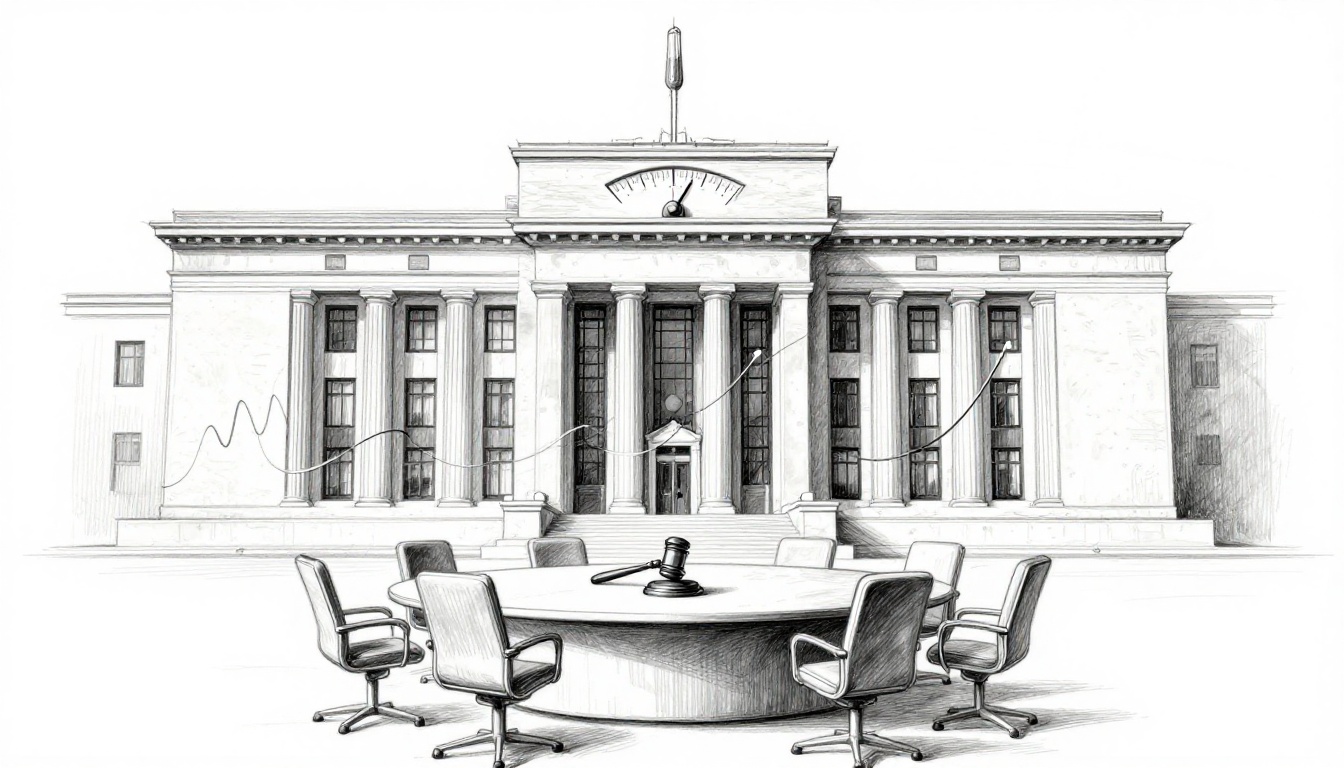
Higher rates can turn a “comfortable” car payment into a bigger monthly bill. Lower rates do the opposite, making mortgages and other loans cheaper over time. In the U.S., the Federal Reserve sets the key short-term rate that ripples through the whole economy.
So how do they pick the right level? You can think of it like aiming a thermostat. If inflation feels too hot, the Fed nudges rates up to cool demand. If the economy feels too weak, they may cut rates to support spending.
Behind the scenes, the decision comes from the Federal Open Market Committee (FOMC). They weigh inflation, jobs, and growth, then signal what they might do next. Markets also react to what the Fed says, not only what it does.
Here’s the full story of how interest rates get decided, who votes, how meetings work, and what to watch when the next decision is approaching.
Who Decides Interest Rates? Inside the Federal Reserve and FOMC
The Federal Reserve is the U.S. central bank. Its job is to keep the economy moving with two goals: stable prices and maximum employment. In plain terms, that means trying to keep inflation near a long-run level and support strong job growth.
The main group that sets the policy rate is the Federal Open Market Committee, or FOMC. The FOMC decides the target range for the federal funds rate. That rate is the interest rate banks charge each other for overnight lending.
When the FOMC changes the target range, it doesn’t just affect one lending rate. Instead, it shifts overall interest-rate pressure across the economy. Lenders then price things like mortgages, credit cards, and business loans based on that environment.
For a clear baseline on how this policy fits together, see The Fed Explained: Monetary Policy. It lays out the Fed’s goals and how policy decisions connect to financial conditions.
A quick mental diagram of the rate chain
Imagine a simple chain:
- FOMC sets the federal funds target range
- That influences short-term money-market rates
- Which affects Treasury yields
- Which then flows into mortgage rates and loan pricing
That’s why you often hear people say “mortgage rates follow Treasury yields.” The Fed controls the starting point, but the full effect shows up through markets.
One more point matters. The FOMC does not work alone in the sense that it doesn’t ignore data. It pulls in reports from across the economy, staff analysis, and market pricing. Still, no other U.S. body overrides the FOMC’s role in setting the federal funds rate target range.
The Role of the FOMC Chair and Voting Members
The FOMC has 12 voting members. In practice, it’s a team, not a solo call. The structure includes:
- Seven voting members who are Board Governors
- Five voting members from the regional Federal Reserve Banks (rotating each year)
At the center is the FOMC chair, currently Jerome Powell. The chair shapes the discussion, sets the tone for press updates, and explains the policy reasoning afterward.
Think about how a meeting works when everyone has different lenses. One member may focus more on inflation trends in services. Another may emphasize job demand and wage pressure. Still another may pay attention to how financial conditions are changing, like whether credit is getting tighter.
Regional presidents bring real-world economic insight from their districts. They also vote on a rotating basis, so the committee doesn’t rely on one region’s conditions.
When you hear recent remarks from figures such as Governor Michelle Bowman, that’s part of the wider process. Not every viewpoint points the same way. But the vote is the vote, and the Fed also publishes a lot of context for why members landed where they did.
The bottom line here is simple: interest rate decisions come from committee voting, with the chair guiding the process and communication.
The Meeting Process: From Data Crunch to Rate Decision
The FOMC meets on a set schedule. There are eight meetings each year, roughly every six weeks. The March 2026 meeting that ended on March 18, 2026 is a good example of how the timeline works.
Here’s the process, step-by-step, in a way you can picture:
- Review the latest data
The Fed looks at inflation readings, job reports, consumer spending, and growth. They also check global factors that may affect prices. - Discuss risks and scenarios
The team weighs questions like: Is inflation cooling in a lasting way? Are job gains slowing without breaking the labor market? - Form policy views
Members debate whether current rates are restrictive enough, or whether they should move up or down. - Vote on the target range
The committee votes to raise, cut, or keep the target range. In March 2026, the vote kept the range unchanged. - Release a statement
The Fed publishes its policy statement, explaining the decision and the reasoning. - Hold the chair’s press conference
Markets also listen to how the chair talks about the next steps, not just the final decision.
This “data to vote to messaging” flow is why markets can move even when the Fed holds steady. Traders parse wording shifts and how optimistic or cautious the Fed sounds.
In March 2026, the FOMC held the target range at 3.50% to 3.75%. That matters because it sets the tone for borrowing costs. It also becomes the baseline for how lenders price new loans.
What Happens After the Vote? Statements and Projections
After the FOMC vote, you’ll usually see three major communication pieces:
- The policy statement
- The dot plot (members’ projections of where rates could go)
- The chair’s press conference Q&A
The statement covers the Fed’s view of inflation progress, the state of jobs, and risks. It also includes the policy rationale in careful language. That language can be more important than you’d expect.
The dot plot is a chart with dots for each participating member. It shows their individual expectation for the future path of the federal funds rate. You don’t need to treat it like a promise. Still, it helps you understand whether the committee’s median member leans toward more tightening or more cuts.
For the “how the Fed implements the decision” side, How the Fed implements monetary policy with its tools explains what happens after the committee sets the target range. It also clarifies how the Fed’s tools move market rates toward that target.
Finally, the chair’s press conference adds nuance. Questions often focus on inflation persistence, labor market cooling, and whether the Fed sees enough progress to change policy.
A common market pattern looks like this:
The Fed holds rates steady.
Yet the chair’s tone suggests either fewer cuts later, or more flexibility.
That’s why “the decision” is only half the story. Communication can shift expectations quickly.
Key Factors That Sway Interest Rate Choices
The Fed isn’t picking a number out of thin air. Instead, it’s balancing goals under uncertainty. Because the future isn’t known, the Fed uses a “wait and see” style more often than people think.
Still, a few drivers show up repeatedly.
The biggest influences behind the federal funds rate
- Inflation trends
The Fed watches whether inflation is moving toward a long-run goal. If inflation looks stuck high, the Fed leans toward keeping rates restrictive, or raising them. - Employment and job conditions
They track job gains, unemployment, and wage pressure. Weak hiring can increase the case for cuts, while hot wage growth can keep pressure on inflation. - Overall economic growth
The Fed tries to gauge whether demand is strong enough to keep prices rising, or weak enough to cool inflation without causing deeper harm. - Financial conditions
Credit spreads, lending standards, and market rates matter. If conditions tighten on their own, the Fed may not need to push as hard. - Global shocks and price pass-through
Oil price moves, exchange rate swings, and geopolitical events can change inflation risks, especially for energy and imported goods.
In March 2026, mortgage rates were also part of the real-world picture. Current 30-year mortgage rates were around 6.40% to 6.73%, depending on the source and loan type. When mortgage rates stay elevated, households feel it quickly through budgets.
So why didn’t the Fed cut in March? One reason is that the Fed often waits for inflation to cool in a durable way. In the latest CPI reading available from early 2026 data, CPI rose 2.4% year over year through February 2026.
That’s progress in one sense. But the Fed still wants confidence that inflation is headed sustainably toward its target.
Inflation and Jobs: The Fed’s Top Priorities
If you want the Fed’s priorities in one sentence, it’s this: cool inflation without breaking the job market.
High inflation typically prompts a tighter stance. When prices rise faster than wages, households feel squeezed. That can slow spending, but it can also lead to more pressure if people adjust by paying higher costs elsewhere.
Low or cooling inflation, paired with a steady labor market, makes rate cuts more plausible. Then the Fed can support growth without reigniting price pressures.
It’s not always a straight line. Job growth can slow first, or inflation can remain sticky in certain categories, like shelter and services. That’s why the Fed looks at multiple readings, not just one headline number.
The chair’s messaging often reflects this reality. If the Fed says it’s watching “incoming data,” it usually means they don’t want to overreact to one report.
In March 2026, the Fed held steady at 3.50% to 3.75%, which fits that cautious approach. They didn’t signal a rush either way.
Global Shocks and Market Signals
The Fed can’t fix wars or oil supply issues. However, it can watch how those shocks might show up in prices.
Oil price changes matter because energy moves through the economy quickly. Even if the shock starts overseas, it can still raise transportation costs, heating bills, and prices for goods.
Market signals matter too. In practice, the Fed pays attention to bond yields and credit conditions. If Treasury yields rise, borrowing costs rise, even if the Fed keeps its policy target unchanged.
That’s also why mortgage rates can change within the same week. Lenders respond to market pricing. In March 2026, mortgage rates moved higher as market rates increased.
If you want a deeper definition of the core policy rate that sits at the center of this process, federal funds rate basics can help you connect the terminology to real-world moves.
Recent Decisions and What to Watch Next
As of late March 2026, the federal funds rate target range sits at 3.50% to 3.75%. The Fed kept that range unchanged at the March 18, 2026 decision. Jerome Powell held the press conference after the policy statement release.
For borrowers, the key takeaway is that rates stayed high enough to keep loan costs elevated. A quick reminder: 30-year mortgage rates in March 2026 were roughly 6.40% to 6.73%. That range can shift with Treasury yields, but it shows the real impact of the Fed’s stance.
Looking ahead, the next scheduled FOMC meeting is April 29, 2026. Until then, markets will keep reacting to incoming inflation data and labor market reports. That includes reports that come out before the meeting.
One practical way to track “what happens next” is to follow three items:
- Inflation readings (what’s changing month to month)
- Job data (whether hiring stays firm or cools)
- Treasury yield moves (because they often drive mortgage pricing)
Here’s a helpful way to think about it: the Fed sets a policy target, but your mortgage and credit costs respond to the broader rate environment. When markets expect change, your rates can move even before the Fed votes.
If you’re planning a big purchase, don’t just watch the headline rate. Check the loan offers available to you now, and compare them weekly. Even small shifts can matter over a long loan term.
Also, budget like rates may stay where they are for a while. The Fed can cut, but it usually prefers evidence, not guesses.
Conclusion: Interest Rates Come From a Vote, Not Guesswork
The interest rate story starts with the FOMC. Members review data, debate risks, then vote on the federal funds rate target range. After that, they publish a statement and share projections and guidance through the chair’s press conference.
Inflation, jobs, and global price pressures steer the decision most often. Markets also react to how the Fed explains its thinking, not just the final number.
In March 2026, the Fed kept the target range at 3.50% to 3.75%. That held steady the pressure that borrowers feel through mortgage and loan pricing.
If you want to stay ahead, track FOMC dates and the latest inflation and jobs data. Then check your rate options and adjust your budget. When the next meeting arrives on April 29, you’ll know what the Fed is actually trying to do. And that makes your financial planning feel a lot less random.