Government money management can feel abstract, until you realize it shapes your taxes and the services you count on. Think of it like running a giant household budget, except the “household” has millions of people and complicated rules.
You want to know where the money comes from, how budgets get built, and why spending sometimes grows faster than revenue. You also want to understand who checks the work and what debt means for the future.
In the U.S. and other countries, the basics stay similar: governments collect revenue, set priorities through budgeting, pay for programs (some by law, some by vote), and track results through oversight. Still, the details can change year to year. Let’s break it down in plain terms, with fresh 2025 and 2026 numbers where available.
Where Do Governments Get the Money to Spend?
Most governments fund spending from three main buckets: taxes, fees and other income, and borrowing. Taxes tend to arrive on a regular schedule, so they usually pay for day-to-day needs like salaries, benefits, and basic services.
Borrowing shows up when spending outruns revenue. In the U.S., that mismatch is large enough to drive ongoing deficits. For FY 2026, the U.S. projects $5.6 trillion in revenue, $7.4 trillion in spending, and a $1.9 trillion deficit.
At a high level, this is what that looks like for the U.S. in FY 2026:
- Taxes provide most revenue (income, payroll, corporate, and more).
- Spending includes mandatory programs and discretionary priorities.
- Borrowing fills the gap, adding debt and future interest costs.
If you like to see the month-by-month pattern behind those totals, the U.S. Treasury’s Monthly Treasury Statement receipts is a good starting point.

Across countries, the exact tax mix differs, but the logic stays familiar. Income tax and sales tax show up almost everywhere. Property taxes appear where local governments need a stable base. And when leaders promise bigger programs, borrowing often rises if taxes do not rise fast enough.
In plain terms, taxes are “steady cash,” and borrowing is “IOUs for later.”
Taxes: The Backbone of Government Funds
Taxes are the main engine for government money. They work like paycheck deductions, just spread across an entire economy.
In the U.S., the biggest tax sources include:
- Individual income taxes (often the largest share)
- Payroll taxes (funding programs like Social Security and Medicare)
- Corporate income taxes
- Smaller categories like customs duties and excise taxes
For FY 2026, U.S. revenue is projected at $5.6 trillion, and it’s overwhelmingly tax-driven. Payroll taxes are projected at about 34% of revenue, while individual income taxes are projected around half.
The key point is stability. Many taxes come in yearly or regularly, so governments can plan staffing, benefit payments, and major contracts with more certainty than they can with one-time revenue.
Also, taxes don’t just raise money. They can shape behavior. For example, higher taxes on some goods may reduce demand. Yet from a budgeting view, taxes are still the most predictable part of the funding mix.
Borrowing and Bonds: Filling the Gaps When Needed
When a government spends more than it collects, it borrows. In many countries, borrowing works through government bonds.
A bond is like a loan from investors to the government. The government sells the bond today, then repays the principal later. In the meantime, it pays interest.
Borrowing does not solve the underlying imbalance by itself. It postpones the bill. Over time, interest costs can become a major expense. In the U.S., net interest on the debt is projected at $1.039 trillion for FY 2026, about 13.8% of total spending.
So borrowing can feel helpful in the short term, but it also locks in future outflows. That matters because higher interest costs can crowd out other priorities.
Other Sources Like Fees and Investments
Taxes are dominant, but they aren’t the only source.
Governments also collect fees for services (permits, passports, park entry, and court-related costs). They can also earn income from investments and from business-like government activities.
In the EU and UK, fee-based revenue exists too, but the big story remains entitlements and health spending. Fees tend to be smaller than tax revenue, so they usually act like a supplement, not a foundation.
Even so, small sources can add up. A government that improves fee collection or invests reserves wisely can reduce how much it needs to borrow. That doesn’t eliminate deficits, but it can change the pace.
Step-by-Step: How Governments Create Their Budgets
Budgets are not just spreadsheets. They’re negotiations over tradeoffs.
A government budget usually starts with a plan from the executive branch. Then lawmakers revise, debate, and vote. Finally, the government puts the plan into law through spending and revenue bills.
In the U.S., the timeline for FY 2026 shows how political and practical pressures can collide. Agencies submit requests to oversight offices, then the President proposes a full budget to Congress. Congress reviews and writes funding bills through committees and votes.
According to U.S. government guidance, you can read through the full sequence in federal budget process steps.
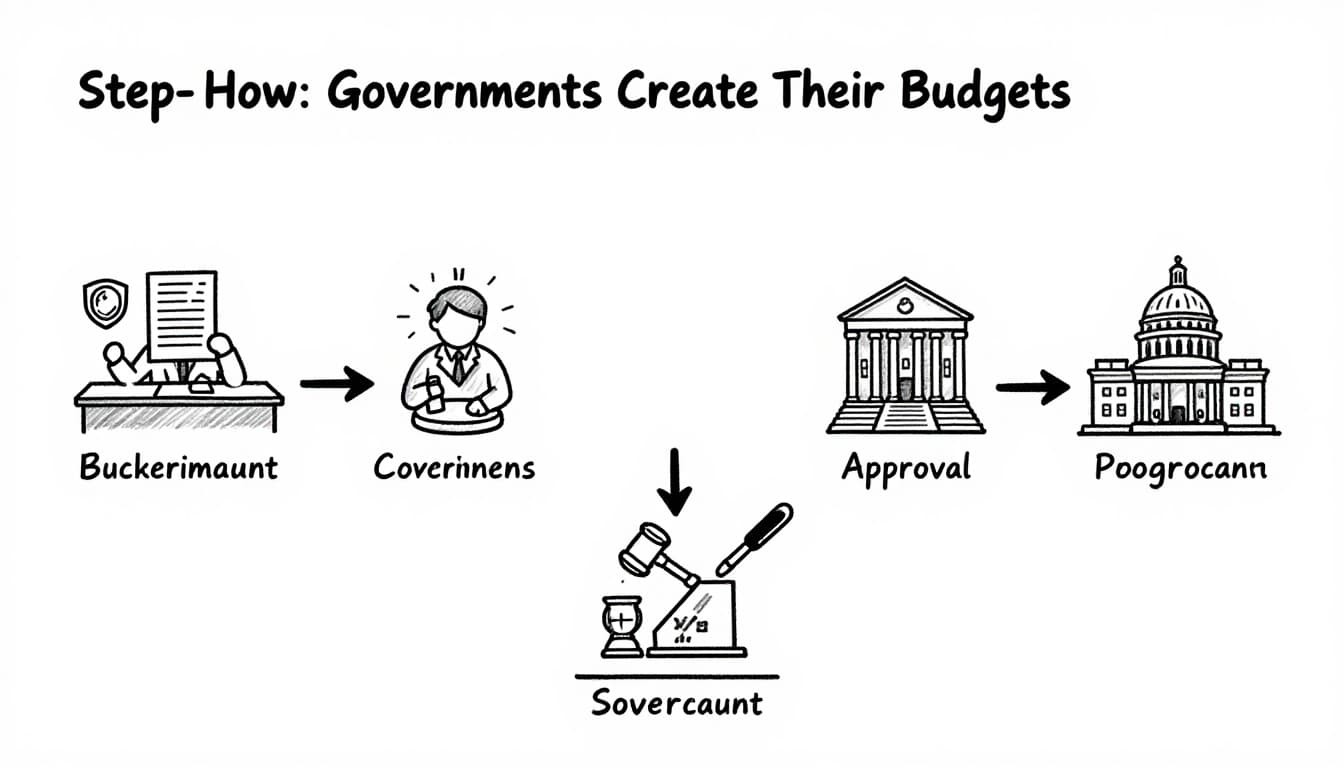
Even with a calendar, budgets don’t always move smoothly. Disputes can delay votes. Short-term funding may extend old rules. Still, the goal is consistent: decide what the government will pay for next year, and how it will fund it.
Who Proposes and Who Approves the Budget?
In most systems, the executive branch proposes the budget, then the legislature approves it.
In the U.S., the President proposes the budget through agencies and budget offices. Then Congress has the power to change funding levels and pass the final legal bills. Committees do much of the detailed work, and analysis groups like the Congressional Budget Office help lawmakers estimate effects.
After that, the President signs bills or uses a veto. If agreements break down, temporary funding can happen to keep basic operations running.
The budget process also splits into different kinds of decisions. Revenue changes require law. Spending changes can be more complicated because many programs are set by existing statutes.
So when you hear “the budget,” it really means a bundle of decisions. Some are about money. Others are about rules and who qualifies for benefits.
Matching Revenue to Needs Without Going Broke
A good budget tries to match ongoing costs with reliable revenue.
Here’s the tension in plain language: you can’t pay future promises with hope. If taxes don’t rise enough, leaders must either cut programs, borrow more, or both.
Many governments try to separate core costs from optional spending. Mandatory programs often run automatically based on eligibility rules. Discretionary programs depend on yearly votes.
That’s why deficits keep showing up. If mandatory and interest spending grows faster than taxes, the gap expands. Then borrowing fills the missing cash, and interest costs rise further.
In other words, the budget is a chain. If one link stretches, the rest have to stretch too.
What Are the Biggest Buckets for Government Spending?
Government spending looks messy at first. Then you notice three big categories.
- Mandatory spending (programs that run by law)
- Discretionary spending (programs lawmakers choose each year)
- Net interest on debt (the cost of borrowing)
For the U.S. in FY 2026, total spending is projected at $7.4 trillion. The net interest line alone is $1.039 trillion.
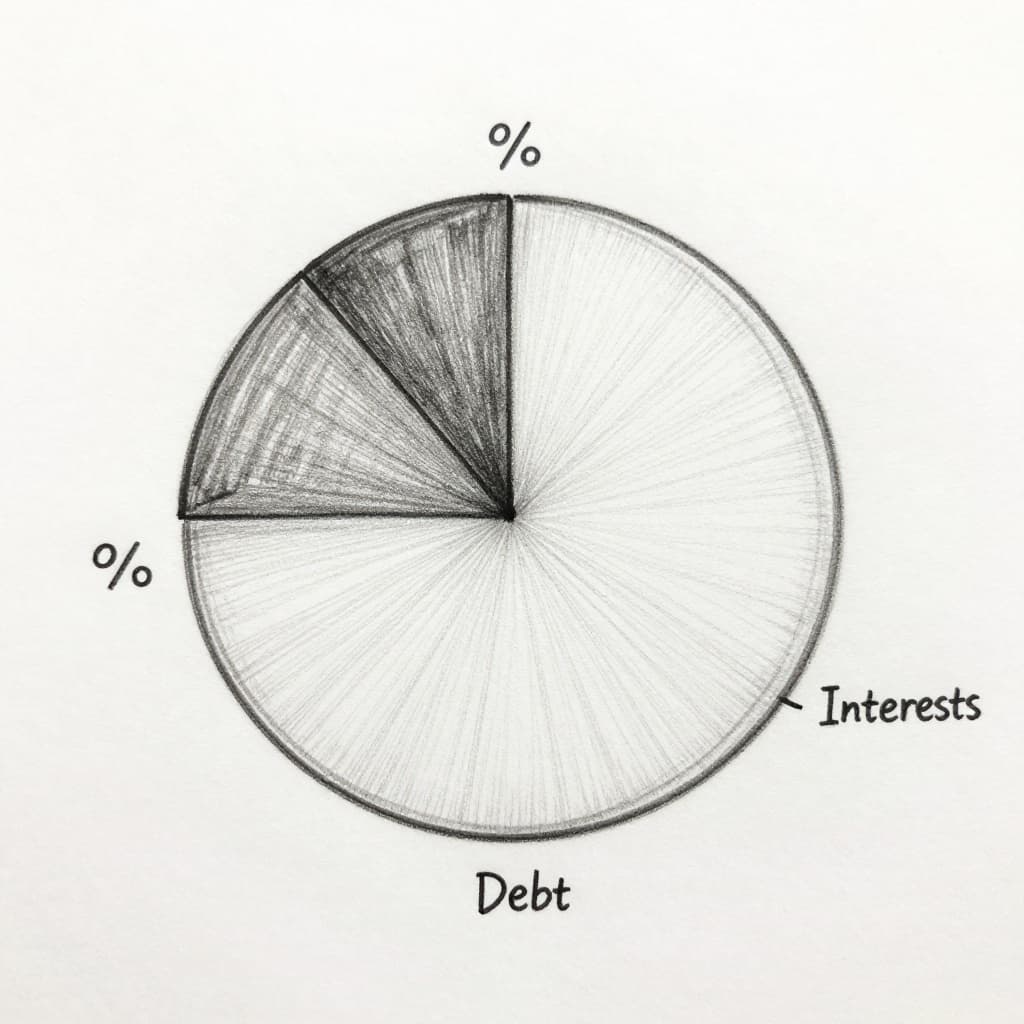
These buckets also explain why budget debates can feel intense. Cutting one bucket may not be politically or legally easy. Meanwhile, interest costs can rise even if leaders do everything “right” in the short run.
Mandatory Spending You Can’t Easily Cut
Mandatory spending includes programs that follow rules already written into law. In the U.S., that includes major benefits like Social Security and Medicare (and related health programs), plus certain aid and transfers.
These costs grow due to aging populations, medical prices, and eligibility rules. That means even if leaders want restraint, mandatory spending often keeps climbing.
For FY 2026, the U.S. expects mandatory spending to be the biggest part of the budget, plus it keeps growing fast. Also, transfers to other levels of government matter. For example, grants and support to states can be a large line item in overall totals.
So mandatory spending is less about annual choice and more about long-term commitments.
Discretionary Choices Like Defense and Schools
Discretionary spending is where annual political choices show up the most. Lawmakers vote on funding levels for programs that are not automatically triggered by eligibility rules.
In the U.S., discretionary areas include national defense, education, transportation, and other federal services. These are often the parts that get debated most during budget negotiations because they can be changed through appropriations.
The White House and agencies also publish details on discretionary priorities. For a look at how leaders frame these requests, see the FY 2026 discretionary request.
Still, discretionary changes do not always solve the whole problem. If mandatory and interest spending rise, discretionary cuts may only slow the deficit, not stop it.
Paying Interest and Helping States
Debt interest is its own spending bucket, and it’s not a “nice to have.” Interest has to be paid to investors who hold government bonds.
As rates change, debt service can rise quickly. For the U.S. in FY 2026, net interest is projected to be the second-largest spending category, about 13.8% of total spending.
Meanwhile, help to states is a big part of the story too. Transfers can support health coverage, education programs, and emergency needs. When budgets tighten, state leaders often feel it fast.
That’s why federal spending isn’t only about Washington. It also shows up in city services, state budgets, and how quickly programs can expand or shrink.
Checks, Balances, and Debt: Keeping It All in Line
Governments manage money through a mix of approvals and enforcement.
Lawmakers approve spending bills each year (or use temporary funding), and they can hold hearings, request reports, and demand documentation. Auditing and oversight bodies also track whether agencies follow rules.
Debt adds another layer. If deficits persist, governments need more borrowing to fund both spending and earlier debt. That can affect interest rates and future fiscal space.
In the U.S., the deficit for FY 2026 is projected at $1.9 trillion. That deficit contributes to debt growth, and the U.S. debt is now over 100% of GDP based on the projections referenced in recent budget data.
Debt is not just a number. It’s future spending on interest.
Oversight Tools to Stop Waste
Oversight aims to reduce waste and keep programs on track.
Common tools include:
- audits by government auditors
- compliance checks for grants and contracts
- reporting requirements in law
- committee reviews and investigations
In practice, oversight can’t remove every problem. But it can prevent the worst ones from repeating. It also improves transparency, which helps voters and lawmakers understand what works.
Also, oversight is often tied to specific spending programs. If a program has poor results, lawmakers may adjust it in future bills.
Managing Debt Without Sinking the Ship
Debt management usually means controlling the path of deficits over time.
Governments have a few levers:
- Cut spending (hard for mandatory programs)
- Raise taxes (politically tough, but possible)
- Grow the economy (helps revenue rise, reduces some ratios)
- Refinance (roll over maturing debt, manage timing)
Still, there’s no magic fix. If a government keeps running large deficits, debt keeps rising. Over time, interest costs can start to “eat” budget room.
So the main goal is often not zero deficits, but a sustainable path. That means bringing revenue closer to costs, or at least slowing the gap so interest costs do not spiral.
2026 Trends in US, UK, and EU Budgets
The big picture is that high debt did not vanish after COVID. It kept shaping choices.
In the U.S., projected FY 2026 totals show the core challenge: spending of $7.4 trillion against revenue of $5.6 trillion. Interest costs are also climbing, which adds pressure even if lawmakers cut other items.
In the UK, 2026/27 plans show spending around 1.4 trillion pounds, with borrowing that has moved down compared to prior periods. The UK also discusses debt costs and strategies to keep financing steady. For official financing planning, the UK debt management report provides details.
Across the eurozone, 2026 policy shifts vary by country. Germany plans a wider deficit of 4.75% of GDP, the largest since 1975, while France expects a deficit around 5% of GDP. Most other countries are holding steady or cutting back.
Meanwhile, the UK forecast update for March 2026 highlights the ongoing link between economic assumptions and fiscal room. The OBR March 2026 forecast is where those receipts and spending assumptions get updated.
So the real theme in 2026 is the same everywhere. Governments are trying to protect core services while keeping debt and interest costs under control.
Conclusion
Government money management boils down to a simple rhythm: collect revenue, set spending priorities, and close gaps when costs outrun receipts. In the U.S. for FY 2026, that gap shows up as a projected $1.9 trillion deficit, with net interest rising into a major spending line.
Budgets get built through a structured process, but results depend on politics and timing. Mandatory spending commitments, discretionary choices, and debt interest all pull on the same budget string.
If you want to stay informed, watch two things: how lawmakers set priorities in each budget cycle, and how deficits translate into future interest costs. When you track those, government money stops feeling vague. It starts looking like the household budget you already understand.